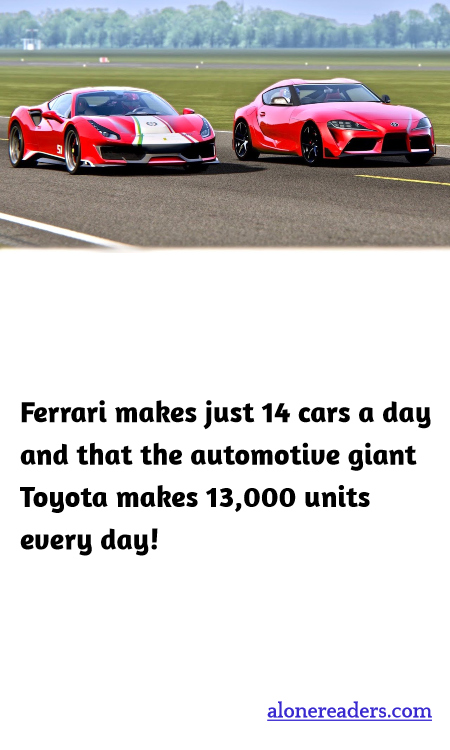
The production rates of Ferrari and Toyota offer a fascinating glimpse into the differing business models and market strategies of two major players in the automotive industry. Ferrari, an iconic symbol of luxury and performance, produces a mere 14 cars each day. This limited production volume is a deliberate choice, rooted in the desire to maintain exclusivity and quality in its high-performance vehicles. Each Ferrari is crafted with a level of attention that ensures it isn’t just a car, but a piece of art, boasting cutting-edge technology and unparalleled design aesthetics. The rarity of these vehicles also bolsters their value, both on the market and in the eyes of collectors.
On the other hand, Toyota, one of the largest car manufacturers in the world, produces about 13,000 units daily. This figure underscores Toyota's role as a mass-market automaker with a focus on accessibility, reliability, and cost-efficiency. Unlike Ferrari, Toyota aims to produce vehicles that are affordable for a broad segment of the population, emphasizing durability and fuel efficiency across a wide range of models. Toyota’s production strategy involves extensive use of automation and efficient manufacturing processes known as the Toyota Production System, which is renowned for its focus on continuous improvement and waste minimization.
The stark contrast between Ferrari and Toyota's production rates also reflects their distinct brand philosophies and target markets. Ferrari’s low-volume production ensures that each vehicle receives personal attention during assembly, which is expected by its elite clientele. In contrast, Toyota’s high-volume approach is designed to meet global demand efficiently, ensuring that a reliable vehicle is accessible to as many people as possible. Toyota's strategy not only serves more customers but also benefits from economies of scale, which help keep costs down and maintain competitive pricing.
Ultimately, the production practices of Ferrari and Toyota illustrate how different businesses can thrive by faithfully serving their unique market segments. While Ferrari caters to the luxury performance market where customers are looking for exclusivity and status, Toyota dominates the general consumer market where practicality, cost, and reliability are paramount. Each company’s production rates are a reflection of their business strategies, market demands, and customer expectations, showcasing a wide spectrum of possibilities in car manufacturing.
