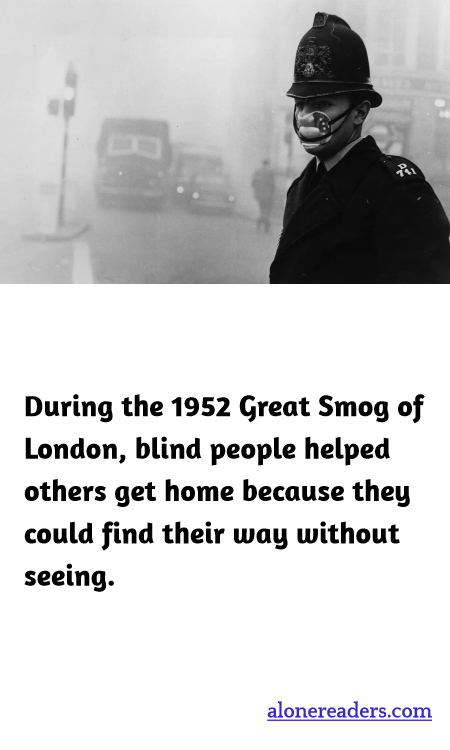
In early December 1952, London was enveloped by a thick fog mixed with urban pollutants, creating a hazardous smog that engulfed the city for five days. Known as the Great Smog of 1952, this event stands as one of the most significant environmental disasters of the 20th century, influencing public health and environmental policies significantly. Visibility was drastically reduced to a few yards, disrupting transportation, outdoor activities, and even infiltrating homes. Public health crises erupted as hospitals noted a sharp increase in respiratory and cardiovascular cases. The death toll attributed to the smog exceeded 12,000, with thousands more affected by health conditions in the ensuing weeks and months.
Amidst this chaos, an unexpected group of city residents played a crucial role in helping others navigate the obscured streets of London. Blind individuals, who were adept at moving through the city with limited or no vision, became invaluable guides during this period. Accustomed to relying on senses other than sight and using tools like canes and guide dogs, blind people could find their way more easily compared to those who were suddenly thrust into a visually impaired world by the dense smog.
Their familiarity with non-visual navigation and heightened senses such as hearing and touch allowed them to help disoriented pedestrians reach their destinations safely. While the smog impaired the sight of those who typically relied heavily on it, blind individuals were less hindered and could use their skills to lead others through the treacherous conditions.
The selflessness and resourcefulness displayed by the blind community during this crisis highlight a profound aspect of human resilience and adaptability. It also contributes to our understanding of how inclusive practices and diverse abilities can provide unexpected strengths in times of collective adversity. Remembering the role of blind individuals during the Great Smog serves as a poignant reminder of the contributions that differently-abled people can make to society, challenging stereotypes and underscoring the importance of accessibility and inclusivity in urban planning and emergency management.
The 1952 Great Smog thus not only shaped environmental and public health policy but also left an imprint on social awareness regarding the capabilities and roles of disabled individuals in our communities.
