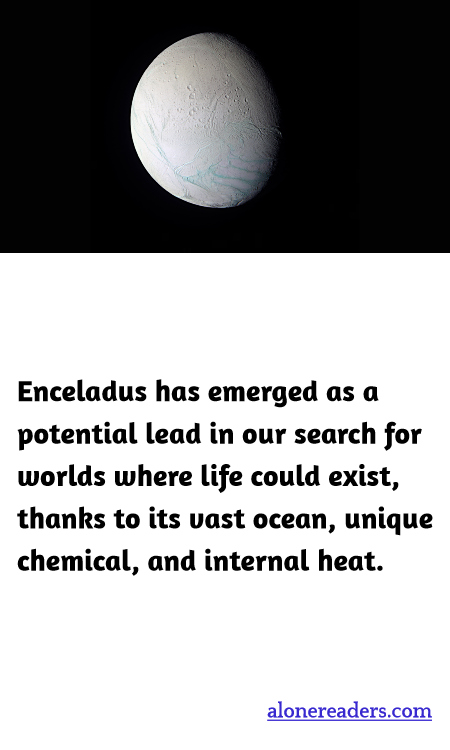
Enceladus, one of Saturn's icy moons, has captivated the scientific community and space enthusiasts alike, positioning itself as a prime candidate in the quest to find extraterrestrial life within our solar system. Despite its relatively small size, Enceladus offers a compelling environment that might support life, chiefly due to its hidden global ocean, intriguing chemical makeup, and internal heating mechanisms.
The discovery of an extensive ocean beneath Enceladus's icy crust came from the data provided by the Cassini spacecraft, which explored Saturn and its moons from 2004 to 2017. Cassini's observations revealed water-rich plumes venting from cracks in the moon's surface at its south pole. These jets expel water vapor and ice particles mixed with organic compounds, hinting at an environment rich in the essential ingredients for life as we know it.
Chemical analyses of these plumes indicate the presence of hydrogen, carbon dioxide, methane, and a surprising amount of silica nanoparticles, which suggest hydrothermal activity on the ocean floor. Such hydrothermal vents on Earth are known to be bustling ecosystems, where life thrives without sunlight, deriving energy from the minerals and heat of the vent fluids. This raises the fascinating possibility that similar processes could support life in Enceladus's ocean, potentially hosting microbial life forms.
What makes Enceladus particularly intriguing is its source of internal heat. Unlike many smaller celestial bodies, Enceladus has not cooled into inactive oblivion. Instead, it is geologically active, possibly due to tidal heating. As Enceladus orbits Saturn, gravitational forces exerted by the planet and its other moons generate heat through the flexing of Enceladus’s body, keeping its ocean liquid and its geysers active.
The implications of these findings are profound. If Enceladus does indeed harbor life, it would dramatically expand our understanding of the conditions in which life can exist and the ubiquity of life in the universe. Future missions to Enceladus are now being proposed, aimed at penetrating its icy crust to sample the ocean water directly from the plumes or through the ice. Such missions could confirm the habitability of its ocean and perhaps even discover the first confirmed extraterrestrial life.
For now, Enceladus stands as a beacon of potential in the vast cosmos, a reminder of the incredible possibilities waiting to be discovered within our own solar backyard. As we plan our next steps in space exploration, Enceladus represents more than just a moon; it symbolizes our continuing quest to understand our place in the universe and the enduring question of whether or not we are alone.
