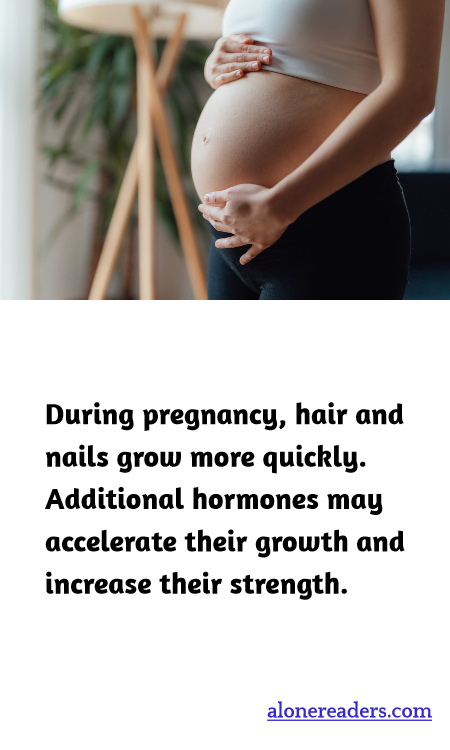
During pregnancy, many women observe notable changes in their hair and nails, frequently experiencing faster growth and increased strength. These changes are primarily attributed to the hormonal fluctuation that occurs during pregnancy. Hormones such as estrogen significantly rise, playing a key role in altering the growth cycles of hair and nails.
Typically, hair has a natural cycle of growth, resting, and shedding. However, increased levels of estrogen during pregnancy extend the growth phase, resulting in less shedding and thicker, fuller hair. This hormone prevents hair from falling out at its normal pace, leading to what seems like accelerated hair growth. However, it's important to note that not all women experience these changes in the same way, and some might even face hair thinning or shedding, particularly postpartum when hormone levels recede.
Similarly, changes in nail growth and texture are also noticeable during pregnancy. Many women find that their nails grow faster and might become either harder and less prone to breaking or softer and more brittle, depending on individual responses to increased hormone levels. Along with hormonal influences, the boost in blood circulation and metabolism during pregnancy also contributes to these changes, providing extra nutrients that foster stronger and faster-growing nails and hair.
Moreover, prenatal vitamins that contain biotin, a key nutrient for hair and nail health, can also enhance these effects. While these changes are generally temporary and revert back to normal post-pregnancy, they are often seen as a positive side effect amidst other less desirable pregnancy symptoms.
Thus, the phenomenon of quicker and potentially healthier growth of hair and nails is yet another example of the profound impacts of pregnancy on the body, influenced heavily by the hormonal rollercoaster that accompanies this critical period in a woman’s life. It's a natural, albeit sometimes surprising, part of the body's adaptation to support fetal development and maternal health. Understanding and nurturing these changes can help manage them better, ensuring that they remain in the realm of delightful pregnancy perks rather than becoming sources of concern.
