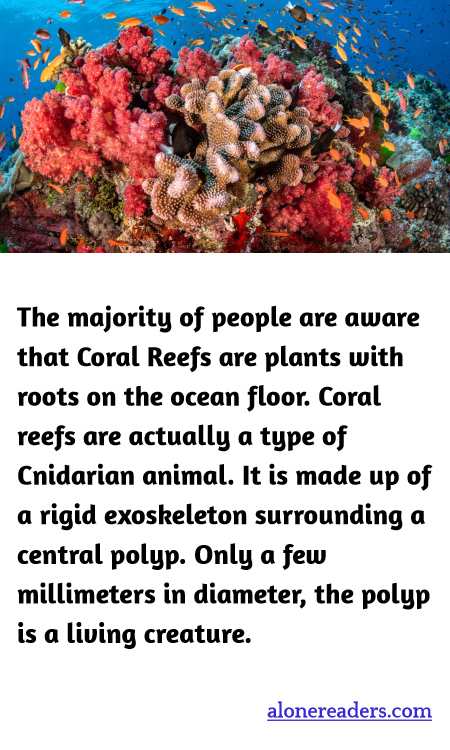
Coral reefs are commonly misunderstood as plant-like organisms with roots anchoring them to the ocean floor. Contrary to this popular belief, coral reefs are not plants at all but rather vast colonies of small, living creatures known as polyps, which are a type of cnidarian animal, similar to jellyfish and sea anemones.
These polyps are only a few millimeters in diameter each and live in a mutually beneficial relationship with algae called zooxanthellae. The polyps construct a hard, external skeleton made of calcium carbonate that serves as protection and support. This exoskeleton builds up over time, creating the vast, beautiful structures we recognize as coral reefs.
The relationship between the coral polyps and the zooxanthellae is a remarkable example of symbiosis, where both parties benefit. The algae reside within the polyps and perform photosynthesis, producing oxygen and helping to remove wastes. In return, the algae receive protection and access to sunlight through the clear waters around the reef. Moreover, the process of photosynthesis provides the polyps with glucose, glycerol, and amino acids, which are essential nutrients for their survival.
Coral reefs are often mistakenly referred to as "rainforests of the sea" due to their immense biodiversity. They provide habitat, shelter, and food for an astonishing array of marine life, including fish, sea turtles, sharks, mollusks, and many other organisms. Unfortunately, coral reefs face significant threats from climate change, such as ocean warming and acidification, which lead to coral bleaching and increased susceptibility to disease. Pollution, overfishing, and destructive fishing practices also pose severe risks to these delicate ecosystems.
Understanding that coral reefs are made up of tiny, living animals and not plants highlights the need for strategies to protect these crucial ecosystems. Conservation efforts and sustainable practices are essential to safeguarding the biodiversity that coral reefs support and the human communities that depend on them for food and economic activity. This knowledge fosters a greater appreciation of coral reefs and underscores the urgency of efforts to preserve these natural wonders for future generations.
