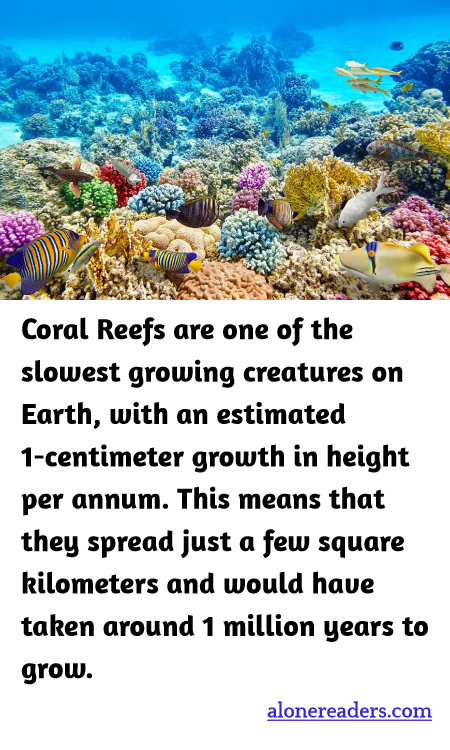
Coral reefs, often referred to as the "rainforests of the sea," are some of the most biologically diverse and complex ecosystems on the planet. Despite their vibrant and bustling appearance, corals grow at an incredibly slow rate, averaging about 1 centimeter per year in height. This slow growth is influenced by water temperature, salinity, turbulence, and the availability of light.
The formation of coral reefs is a painstakingly slow process that spans centuries or even millennia. It is estimated that some of the larger reefs, like the Great Barrier Reef, which stretches over 2,300 kilometers, began forming around 500,000 to 1 million years ago. The age of a coral reef, however, can vary widely depending on the species of coral and the environmental conditions.
Corals are marine invertebrates belonging to the class Anthozoa of the phylum Cnidaria. They typically live in compact colonies of many identical individual polyps. The reefs grow because each individual polyp secretes a skeleton of calcium carbonate. Over generations, these skeletons accumulate, layered upon each other, forming the large expanse of coral reefs.
The entirety of a coral reef ecosystem is fragile, highly vulnerable to changes in water temperature, storm frequency, pollution, overfishing, damaging fishing practices, and the acidification of oceans caused by increased carbon dioxide levels in the atmosphere. Each of these factors can adversely affect coral health, leading to coral bleaching and eventually, the death of the coral.
Given the slow growth rate of corals and the risks they face from environmental and human-induced threats, conservation and preservation efforts are vital. Marine protected areas, sustainable fishing practices, reduction in carbon emissions, and public education campaigns about the importance of protecting these ecosystems are critical steps needed to ensure the survival of coral reefs for future generations. Through meticulous and focused conservation efforts, humanity can attempt to mitigate further damage and foster an environment where coral reefs can not only survive but thrive.
