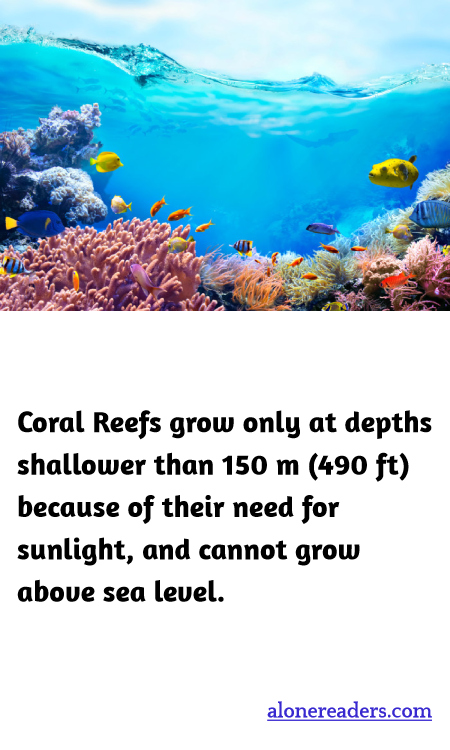
Coral reefs are among the most vibrant and ecologically valuable ecosystems on the planet, supporting an immense variety of marine life. However, they face strict environmental limits on their growth due to their unique reliance on sunlight. Corals contain zooxanthellae, symbiotic algae that photosynthesize and provide energy to the coral. Because of this symbiotic relationship, coral reefs can only thrive in conditions where sunlight is abundant. This is why coral reefs are typically found at depths shallower than 150 meters (490 feet); beyond this depth, sunlight diminishes significantly and is insufficient for photosynthesis.
The limitation on the upper growth of coral reefs is equally stringent. Corals cannot grow above sea level as they require constant submersion in seawater. Exposure to air can lead to desiccation and death of the coral polyps. Therefore, coral reefs naturally form and grow within a relatively narrow band of depth where conditions are just right – shallow enough to allow ample sunlight penetration, yet submerged beneath the water’s surface.
The health and growth of coral reefs are also influenced by the temperature and clarity of the water. They generally thrive in clear, warm waters where sunlight can easily penetrate. Murky waters reduce the amount of light that reaches the coral, while extreme temperatures can cause coral bleaching, a stress response in which corals expel their symbiotic algae, leading to a decline in coral health and potentially, to their death.
The precise conditions required for coral growth highlight the fragile nature of coral ecosystems and underscore the importance of preserving the environments where they exist. As climate change advances, rising sea temperatures and increasingly acidic oceans pose significant threats to coral reefs globally. Protecting these environments from overfishing, coastal development, and pollution is crucial to ensuring that coral reefs continue to thrive, maintaining biodiversity and the many ecological benefits they provide.
