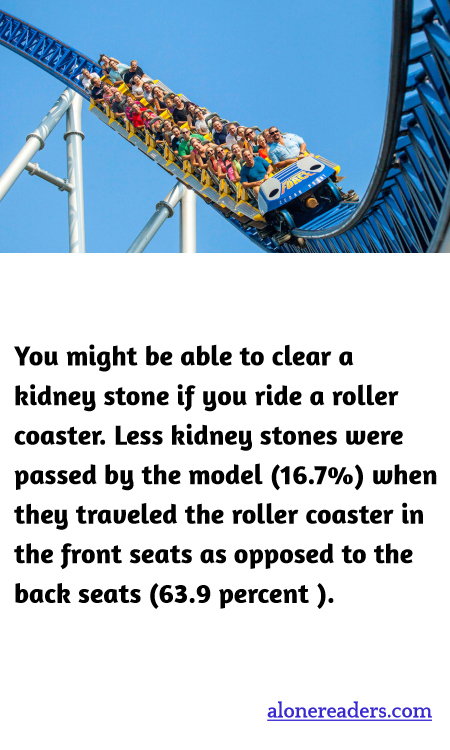
Kidney stones, small hard mineral deposits that form in the kidneys, are a common and often excruciatingly painful condition. Surprisingly, a rather unconventional method for helping to dislodge these stones might just be a thrilling ride on a roller coaster. Research and anecdotal evidence suggest that the motion and force exerted by roller coasters can indeed aid in the passage of kidney stones.
A study focusing on the effects of roller coaster rides on kidney stone passage observed a significant difference in the success rate of stone passage depending on where participants sat during the ride. Those seated in the back of the roller coaster passed kidney stones at a higher rate of 63.9%, compared to a lesser 16.7% passage rate for those seated towards the front. The explanation behind this phenomenon lies in the dynamics of the ride. Roller coasters generate intense forces and movements as they speed along their tracks, particularly in the back cars where the whip effect is strongest. This intense jostling may help to dislodge the stones from the kidney's crevices, allowing them to pass more quickly and with potentially less pain.
This method, though unconventional, offers a potentially less invasive option for individuals suffering from smaller kidney stones. However, it's crucial for patients to consult with a healthcare provider before considering this method. The effectiveness and safety of roller coaster rides for stone passage can vary based on the size and location of the stone, as well as the individual's overall health and medical history.
In addition to the roller coaster method, standard treatments for kidney stones include hydration, pain relievers, and in some cases, medical procedures like lithotripsy, which uses shock waves to break stones into smaller pieces that can be passed more easily. For larger stones, surgical removal may be necessary. Preventive measures can also be effective in managing kidney stones, including maintaining adequate hydration, adopting a diet low in salt and animal proteins, and avoiding foods high in oxalate like spinach and almonds.
While riding a roller coaster might not be a cure-all for kidney stones, it represents a fascinating intersection of physics and medicine, offering a glimpse into the unique and sometimes unexpected ways in which everyday experiences can impact our health.
