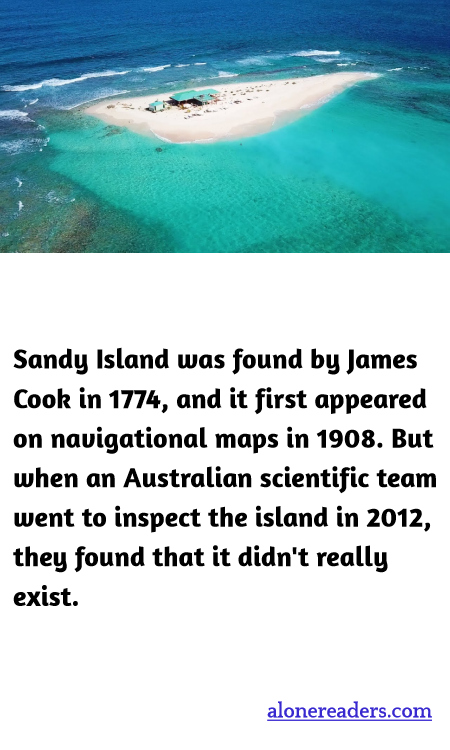
Sandy Island, once charted as located off the northeast coast of Australia in the Coral Sea, presents a curious case of a cartographic error persisted through centuries. James Cook, the renowned British explorer, supposedly discovered the island during his historic voyages in the 18th century. It was subsequently recorded and appeared on maps beginning in 1908, intriguing mariners and scientists alike.
For over a century, the enigmatic island appeared in various world maps and even on Google Earth, perpetuating its existence despite the lack of validating evidence from recent times. It was often depicted as a sizable landmass positioned west of New Caledonia. However, no modern navigational tool seemed to corroborate its existence, and the island was out of sync with the increasingly precise satellite data and advanced maritime charts.
The mystery of Sandy Island deepened until an Australian scientific expedition in 2012 aimed to pinpoint its exact location. Led by Maria Seton, a geologist from the University of Sydney, and her team aboard the ship called the Southern Surveyor, they navigated to the recorded coordinates of Sandy Island. To their surprise, they found nothing but open ocean. Further investigations revealed that the depths in the expected island's location were around 1400 meters deep, ruling out the possibility of an underwater mountain or shoal that had been mistaken for an island at the surface.
The scientists’ findings stimulated a reexamination of the historical records and revealed that the island was included in the Admiralty Charts as early as the 19th century based on whaling ship reports. It appeared that the initial sightings might have been erroneous or were no longer valid due to volcanic activity or shifting sands—common in the dynamic Pacific Ocean environment. Another hypothesis was that what was once believed to be an island could have been a pumice raft, which are floating platforms of volcanic debris that could easily disappear.
Following the 2012 expedition, Sandy Island was officially "undiscovered," prompting immediate corrections across various mapping applications and nautical charts. This incident not only illustrated the challenges in cartography and navigation but also served as a reminder of the ever-evolving nature of geographical knowledge and the mysteries that continue to surround unexplored or insufficiently examined regions of our planet.
