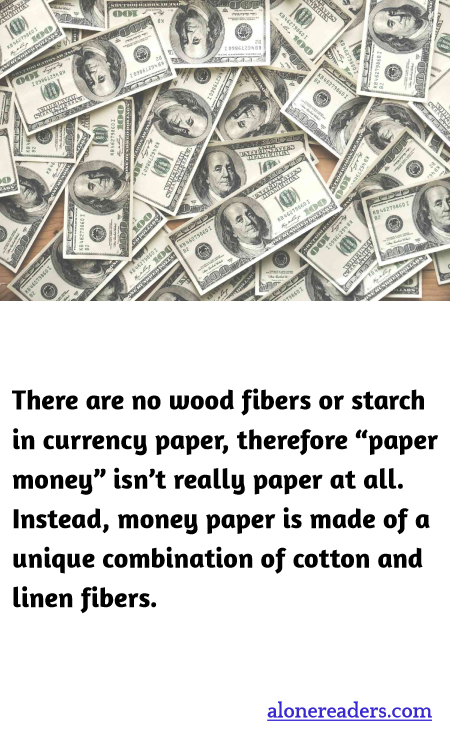
When people refer to "paper money," the term is somewhat misleading because the material that comprises banknotes is not the ordinary paper used for writing or printing. Unlike typical paper, which is primarily made from wood fibers, the substance used in the production of currency is far more durable and sophisticated. Currency paper is chiefly made from a unique blend of cotton and linen fibers, which contribute to its longevity and robust nature.
Cotton and linen fibers provide several advantages over wood pulp. Not only are these materials more resistant to tearing and disintegration, but they also give the banknotes a distinct feel—a crucial feature for the detection of counterfeits. Moreover, cotton and linen are able to absorb specific security features, including watermarks and security threads, which are embedded during the production process.
The inclusion of these natural fibers results in a currency that can withstand the wear and tear of daily handling far better than ordinary paper. This durability is essential for banknotes since they are frequently folded, crumpled, and exposed to various environmental elements. Furthermore, the weave of cotton and linen gives banknotes their slight texture, a characteristic that not only enhances durability but also aids in the automation processes of counting and dispensing machines used in banks and ATMs.
Furthermore, these materials allow for advanced printing techniques that improve security features like microprinting, color-shifting inks, and holograms which can be intricately woven into the design. This not only combats counterfeiting but also allows for aesthetically detailed and visually appealing designs, thereby reinforcing the currency’s authenticity and value.
In light of these factors, while it might be termed as "paper money," the banknotes are crafted from substances that elevate them far beyond conventional paper, ensuring they are fit for their purpose in the global economy. This careful selection of materials showcases the combination of tradition, innovation, and practicality in currency design, reflecting the sophisticated nature of modern financial systems.
