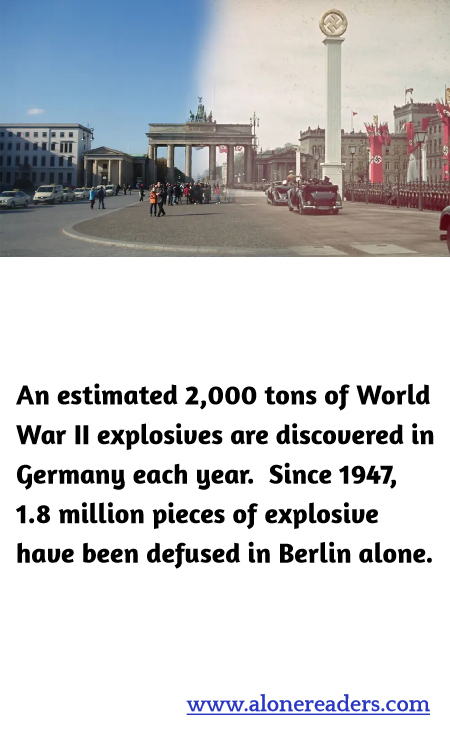
Every year, Germany grapples with the legacy of World War II in a quite literal sense, as about 2,000 tons of unexploded ordnance are unearthed across the nation. This lingering reminder of wartime is not just a historical footnote but a present-day hazard affecting construction, development, and daily life in areas particularly besieged by the past's munitions. Since 1947, a staggering 1.8 million explosive devices have been safely defused in Berlin, underscoring the magnitude of the problem in the capital alone.
The bombs, dropped during the numerous air raids of the war, often burrowed underground without exploding. Over the decades, urban expansion and reconstruction efforts have frequently brought these hidden dangers to the surface. The process of safely removing and defusing these devices is intricate, involving evacuations, road closures, and a significant deployment of resources. Bomb disposal teams meticulously plan and execute the defusal operations, ensuring minimal disruption while prioritizing public safety.
The scale of unexploded ordnance in Germany necessitates constant vigilance. Each discovery of a World War II bomb typically triggers a well-rehearsed protocol that can affect thousands of residents at a time. Schools, hospitals, and entire neighborhoods are often evacuated; transportation networks are disrupted; and the local economy temporarily stalls as bomb disposal experts work against the clock.
Moreover, the psychological impact on local populations cannot be understated. The regularity of these findings is a stark reminder of the war's enduring footprint. While younger generations might view these incidents as mere inconveniences, for many older residents, they rekindle the traumas of the past.
Despite the challenging task, the expertise and efficiency of Germany's bomb disposal squads are commendable. With advancements in technology, techniques in bomb detection and defusal have evolved, enhancing safety protocols and reducing the risk to human life. However, the sheer volume of unexploded ordnance still poses a significant challenge.
As Germany continues to build and expand, the legacy of World War II explosives serves as a unique intersection of past conflict and present development. The ongoing necessity to address these remnants is a costly yet vital aspect of German infrastructure and community safety. Each defused bomb is a reminder of the enduring impacts of war, and the importance of peace and strategic reconciliation. With each passing year, the efforts to clear unexploded ordnance from Germany’s landscape continue unabated, a critical, enduring task ensuring the safety and stability of the nation.
