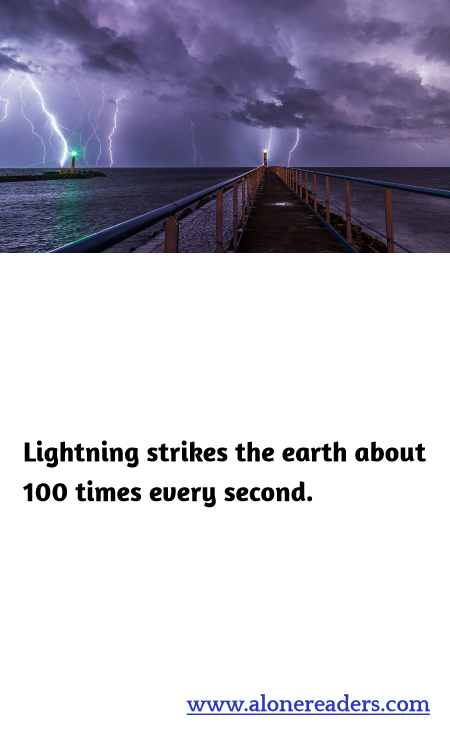
Lightning is one of nature's most powerful and awe-inspiring phenomena. Each second, our planet experiences approximately 100 lightning strikes, which equates to nearly 8 million strikes per day. These electrical discharges are not only spectacular to witness but also play a crucial role in the Earth’s atmospheric chemistry.
Lightning occurs when electrical charges build up within a cloud due to the colliding of water and ice particles affected by updrafts. The charge builds up until it's discharged in a spectacular flash, either between clouds or between a cloud and the ground. This atmospheric spark is capable of reaching temperatures that surpass the surface of the sun, about 30,000 degrees Celsius, and can travel at speeds of 60,000 m/s.
The phenomenon is also essential for the production of ozone in the lower atmosphere. Lightning helps in the natural production of nitric oxides, which are precursors to ozone and other vital chemicals that help clean the atmosphere by breaking down impurities and thus improving air quality. Additionally, these nitric oxides are vital in the formation of nutrients such as nitrate that are crucial for the growth of plant species.
Moreover, lightning plays a significant role in forest ecology. In regions like North America, lightning-induced fires are a natural part of forest rejuvenation. These fires help clear decaying underbrush, making way for new growth, maintaining the health and balance of forest ecosystems. However, while these fires can be beneficial environmentally, they can also pose serious threats to human lives and property, emphasizing the need for effective forest management and fire prevention strategies.
Interestingly, the distribution of lightning is not even around the globe. It tends to occur more frequently in areas close to the equator and at specific points where geographic factors contribute to severe weather conditions. The Congo Basin in Central Africa, for instance, receives the highest frequency of lightning strikes on Earth.
Despite its regular occurrence, lightning is unpredictable and can cause significant damage. It is estimated that lightning strikes cause thousands of deaths annually and substantial economic damage. This underscores the importance of appropriate safety measures such as using lightning rods on buildings, avoiding open areas during thunderstorms, and following guidelines from weather experts.
Through advances in technology, forecasting where and when lightning will strike has improved, allowing for better preparedness and minimizing its dangers. Understanding this natural electrical phenomenon not only allows us to marvel at its might but also to further appreciate and respect the forces of nature while adopting practices that minimize its risks.
