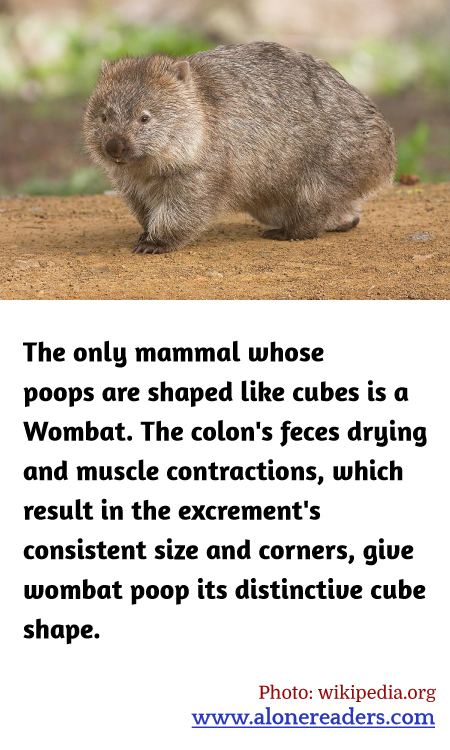
Wombats, the short-legged marsupials native to Australia, are known for a rather peculiar characteristic: their cube-shaped poop. Unique in the animal kingdom, this distinctive fecal form is a result of the wombat's digestive process. The animal's colon extracts water from the waste, drying it out and causing it to become compacted into a flat-sided shape. The muscle contractions of the wombat’s intestines then sculpt these dry masses into consistent sizes and sharp corners, producing the cube shape by the time the excrement is ready to be expelled.
Interestingly, the function behind this unusual trait goes beyond the biological aspects and plays a key role in the wombat's ecological interactions. The cube shape prevents the feces from rolling away, allowing wombats to effectively mark their territory and communicate with one another through scent. By depositing piles of square droppings at prominent locations such as atop rocks and logs, wombats use their uniquely shaped poop to signal occupation and avoid unnecessary conflict with other wombats.
Scientists studying wombat feces believe that understanding the process that leads to its cube shape could have broader applications, such as in manufacturing, by providing insights into new ways to shape soft materials. The wombat’s intriguing method provides another example of how the peculiarities of the animal world can offer unexpected insights and benefits to human understanding and technology.
