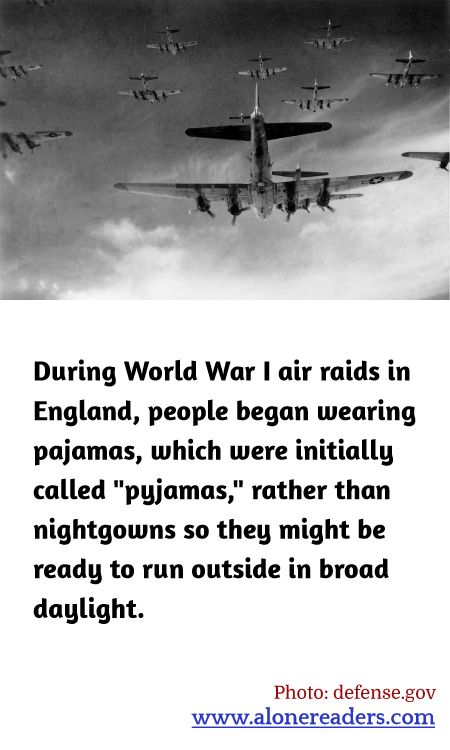
The shift from traditional nightwear to pyjamas during World War I in England was a practical response to the new realities of living under the threat of air raids. Before the war, it was common for both men and women in England to wear nightgowns. These garments, usually long and made from cotton, linen, or silk, were primarily designed for sleeping comfortably indoors. However, the advent of World War I brought about many changes, including the need for night attire that could double as suitable public wear during emergencies.
The introduction of air raids over England meant that civilians often had to quickly evacuate their homes at a moment’s notice, sometimes during the night or early morning hours. Being suddenly thrust into public view while dressed in a traditional nightgown was considered inappropriate and impractical. Pyjamas offered a solution; they were originally borrowed from Indian dress, made popular in Britain during the late 19th century through British colonization of India. The style was loose, lightweight, and comfortable, but more importantly, it was considered decent enough for mixed-gender company and public appearance.
As air raids became more frequent, the utility of pyjamas grew. They started to be seen not just as a practical choice but as a necessary adaptation to wartime life. This change also reflected broader shifts in societal norms and attire that were accelerated by the war, including the relaxation of strict dress codes and the increasingly practical roles women were taking on, which often required less restrictive clothing. Pyjamas were easier to quickly slip into, and being essentially a two-piece suit with a button-up top and trousers, they allowed for greater mobility and decency in the event of sudden nighttime evacuations.
This transformation in sleepwear during World War I is a small yet poignant example of how the conflict infiltrated even the most private aspects of life, altering how people dressed at all hours. More broadly, it reflected the adaptability and resilience of civilians under threat, adjusting to the demands of wartime realities. The popularity of pyjamas continued to grow post-war, eventually becoming a staple in sleepwear for both men and women, thus permanently changing the landscape of night attire in the Western world.
