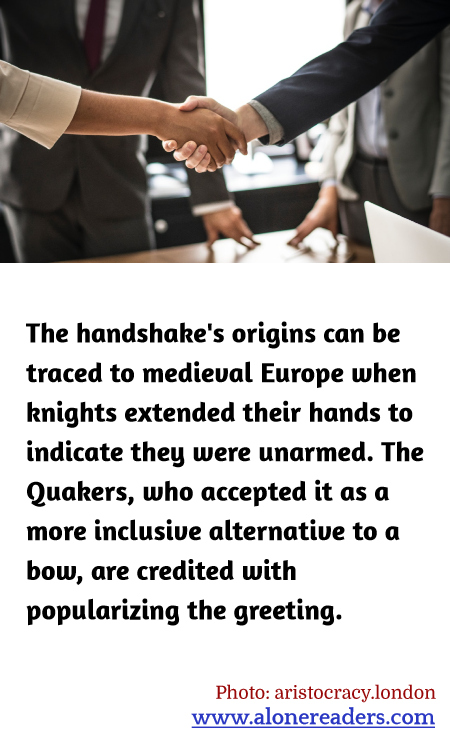
The handshake, a common gesture of greeting and agreement, has a storied history that reaches back to medieval Europe. Historically, it was a way for individuals, particularly knights, to show they were unarmed. By extending an empty hand, they demonstrated peace and goodwill. The gesture evolved over time, becoming a symbol of equal footing and mutual respect among peers.
The Quakers played a significant role in the widespread adoption of the handshake. In the late 17th century, this religious group favored the handshake over more hierarchical greetings such as bows or hat tips. The Quakers valued simplicity and egalitarianism, and they saw the handshake as a form of greeting that reflected these principles. It did not distinguish between social classes or levels of authority, making it a more inclusive form of interaction.
Today, the handshake is used worldwide as a sign of introduction, agreement, or parting, transcending cultures and languages. It serves not only as a gesture of greeting but also often as a conclusion to agreements or negotiations, symbolizing a completed deal or mutual consent. In many cultures, the nature of the handshake—its firmness, duration, and technique—can convey a wealth of information about the individuals involved, from their confidence levels to cultural background.
Despite its ubiquity, the handshake has been challenged by global events, such as the COVID-19 pandemic, which prompted health concerns about traditional forms of physical contact. This has led to the exploration of alternative greetings, such as elbow bumps or simple nods, which might become more prevalent in the future. Nevertheless, the handshake's rich heritage and deep-rooted symbolism in global etiquette suggest that this traditional gesture will likely maintain its significance for years to come.
