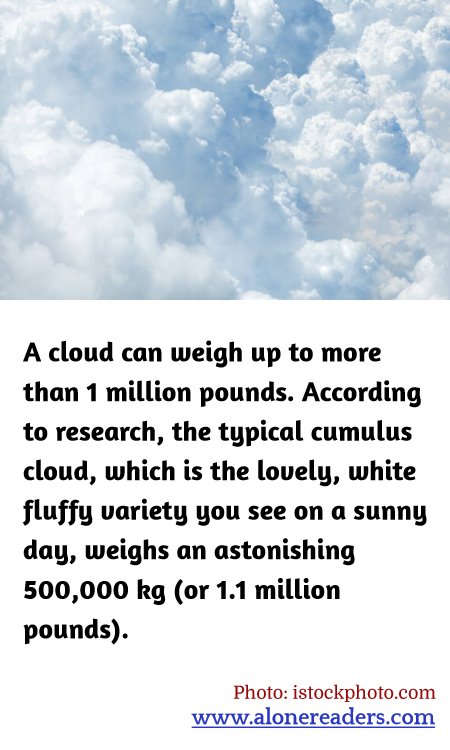
Clouds, despite their fluffy and insubstantial appearance, pack a surprising heft. Research indicates that a typical cumulus cloud—those picturesque, cotton-like clouds dotting clear blue skies—weighs an incredible 500,000 kilograms, or about 1.1 million pounds. This weight is derived from the water droplets and ice crystals that make up the cloud, suspended in the Earth's atmosphere.
The fact that these heavy masses can float is thanks to the density and temperature of the air surrounding them compared to the moist air within the cloud. Warm air rises, and as it does, it cools, causing moisture to condense into tiny droplets over dust particles, which collectively form clouds. These droplets are so small and light that they can float in the air.
Understanding how a cloud can support such weight also involves appreciating the vast size of these structures. A cumulus cloud can span several kilometers across, and the water is spread over such a vast area in the form of countless tiny droplets. The spread of the cloud’s mass over such a large volume allows it to stay aloft easily.
This insight into the weight of clouds helps us appreciate the intricate balance and complex physics of our atmosphere. It’s a fascinating example of nature’s dynamics, which combines the principles of thermodynamics, fluid mechanics, and chemistry to sustain such phenomena. Such knowledge not only deepens our understanding of meteorological events but also fuels improvement in weather prediction models, which are vital for preparing for and managing weather-related disasters.
