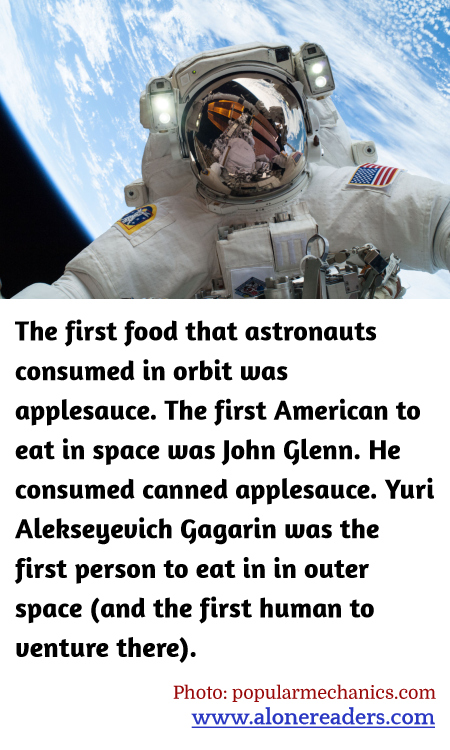
When discussing the early days of space travel, one of the lesser-discussed yet vital aspects is the diet of astronauts in space. One of the quirkiest yet pioneering moments in space travel involved the consumption of the first food in orbit: applesauce. This marked a critical exploration into the possibilities of eating under zero gravity conditions, paving the way for future space nutrition research and advancements.
The first American to eat in space was astronaut John Glenn during the Mercury-Atlas 6 mission in 1962. His consumption of canned applesauce was not just a meal choice but a carefully planned experiment to test the feasibility of eating in a weightless environment. NASA needed to confirm that astronauts could swallow and digest food properly without gravity before committing to longer missions.
On the other side of the space race, Yuri Alekseyevich Gagarin, the first human to journey into outer space, was also the first person to eat there. His historic flight aboard Vostok 1 not only smashed previous boundaries of human achievement but also tested human biological capabilities, including eating in space, which was crucial for the future of space exploration.
These initial moments of consuming applesauce in space were steps that might seem small but were giant leaps in understanding human biological functions in space, guiding future decisions on space food systems and astronauts' diets. These pioneering events set the stage for the development of more sophisticated space food that astronauts eat on longer missions today, including better tasting, more varied, and nutritionally balanced meals. These adaptations have been critical for ensuring astronauts' health and well-being during long-duration missions such as those on the International Space Station or potentially future voyages to Mars and beyond.
