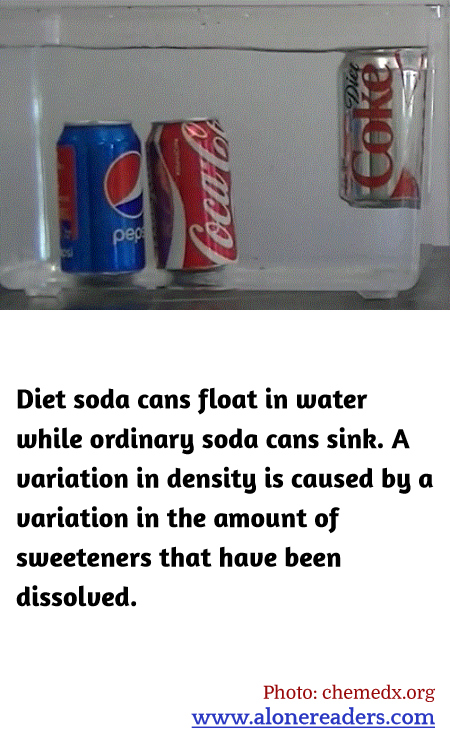
When you place a can of regular soda and a can of diet soda into water, you might notice something curious: the diet soda floats while the regular soda sinks. This phenomenon is intriguing and can be explained through the principles of density and buoyancy.
Density is determined by the mass of a substance compared to its volume. The cans of soda themselves are identical in size and shape, which means the difference in floating and sinking arises from the contents of the cans. Regular soda typically contains sugar, whereas diet soda contains artificial sweeteners. These sweeteners are much sweeter than sugar, and as a result, they are used in much smaller amounts.
Sugar, being denser than water, increases the density of the soda when it is dissolved in it. A can of regular soda contains a high amount of dissolved sugar, sometimes up to 40 grams. This significant quantity of sugar increases the overall mass per unit of volume, making the regular soda denser than water. Therefore, when placed in water, regular soda cans are more likely to sink due to their higher density.
On the other hand, the artificial sweeteners used in diet sodas are much less dense than sugar. Since these sweeteners are used in much smaller quantities, the mass added to the soda is minimal. As a result, the overall density of diet soda remains closer to that of plain water. Because of this lower density, when diet soda cans are placed in water, they are more likely to float.
Understanding this principle not only makes for a curious kitchen experiment but also provides a practical example of how density and buoyancy work. It also sheds light on the significant difference in the composition of sweeteners used in diet versus regular sodas. This knowledge might influence consumer choices, particularly among those monitoring their sugar intake or those fascinated by the physical properties of everyday objects.
