Tsunamis, often referred to as seismic sea waves, are a formidable force of nature characterized by their incredible speed and devastating impact. Unlike the typical waves that splash along the shoreline, tsunamis are generated primarily by underwater earthquakes, volcanic eruptions, or landslides. The displacement of water resulting from these disturbances causes waves that can travel across oceans at immense speeds.
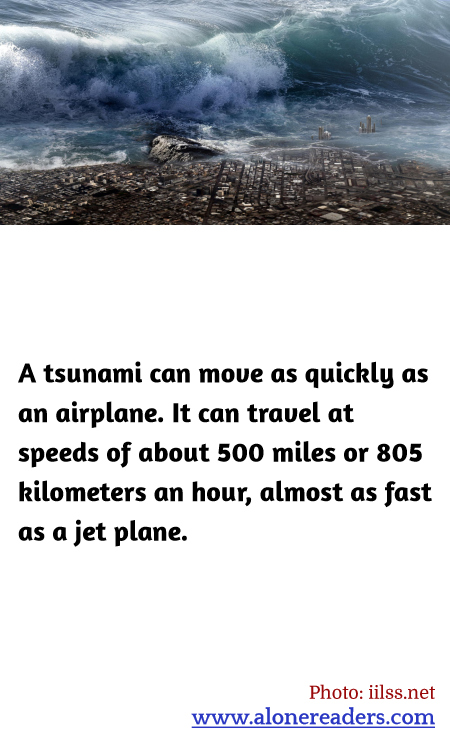
The speed at which a tsunami travels is comparable to that of a jet airplane, reaching up to 500 miles per hour (805 kilometers per hour). This rapid pace allows tsunamis to cover extensive distances across the ocean in just a few hours. Despite its high speed in deep water, the height of the wave remains low in the open ocean, which often makes it undetectable by ships.
As a tsunami approaches the shallow waters near the coast, its speed decreases while its height increases dramatically. This phenomenon is known as wave shoaling. The energy of the wave, which was spread over a greater depth in the open ocean, becomes concentrated in shallower waters. Consequently, what might have been an imperceptible rise in wave height in deeper waters can amplify into monstrous, towering waves near the coast, capable of devastating coastal communities.
The infamous 2004 Indian Ocean tsunami, which was triggered by a massive undersea earthquake off the coast of Sumatra, Indonesia, is a stark reminder of the destructive power of these waves. It reached the coasts of several countries bordering the Indian Ocean, causing widespread destruction and loss of life. This event highlighted the need for an effective tsunami warning system, which can provide crucial time for evacuation and preparation.
Therefore, understanding the speed and the mechanics of tsunamis is critical for disaster preparedness and can significantly mitigate their potential damage. Advances in seismic monitoring and oceanography help to predict the occurrence of tsunamis and track their movement across oceans, providing vital warnings to vulnerable areas. Imparting knowledge and awareness about how to respond to tsunami warnings is equally essential to minimize the impact on human life. This combined approach of advanced warning systems, education, and community preparedness is key to defending against the rapid and often deadly onslaught brought on by tsunamis.
