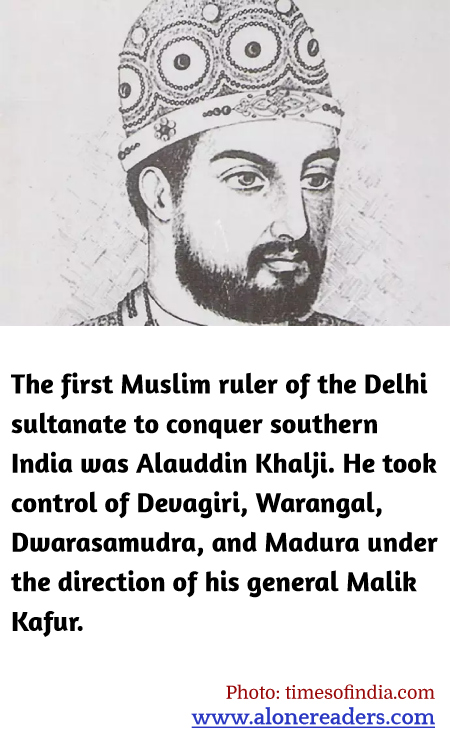
The conquests of Alauddin Khalji, particularly in southern India, marked a significant expansion of the Delhi Sultanate and showcased the ambit of Khalji's imperial ambitions. Alauddin Khalji, who ruled from 1296 to 1316, was the second ruler of the Khalji dynasty in India. He is often remembered for his military prowess, administrative reforms, and for being one of the most powerful sultans of the Delhi Sultanate.
Alauddin's interest in the south of India was primarily driven by his desire for wealth. The kingdoms in southern India, known for their affluence and prosperous trading towns, provided a ripe opportunity for plunder. By 1306, determined to assert his dominance beyond the traditional sultanate territories, Alauddin dispatched his most trusted general, Malik Kafur, to lead a series of campaigns in the south.
Malik Kafur, a captured slave who rose to become a general in Khalji’s army, proved to be an astute and ruthless military leader. His first significant venture into the south was against Devagiri, ruled by the Yadava dynasty. The campaign was a success, resulting in the submission of the Yadava ruler, and a substantial tribute being paid to the Delhi Sultanate. Encouraged by these results, Kafur pushed further into the Deccan and South India.
The subsequent years saw a series of expeditions against other major southern dynasties. The Kakatiya kingdom of Warangal was targeted next, followed by attacks on the Hoysala kingdom of Dwarasamudra and the Pandyan kingdom of Madura. Each campaign brought back immense wealth, including treasures, gold, and precious stones, which significantly bolstered the coffers of the Delhi Sultanate. The success of these campaigns also expanded Khalji’s control and influence, establishing a temporary but impactful presence in southern India.
These conquests, however, were not just about wealth. They were strategic in weakening the southern kingdoms, which posed potential threats to the sultanate’s dominance in the Indian subcontinent. By subjugating these kingdoms, Alauddin Khalji effectively curtailed any immediate challenges to his rule from these territories.
Nevertheless, the impact of Alauddin Khalji’s southern campaigns was not merely temporary. They set a precedent for subsequent rulers of the Delhi Sultanate and later, the Mughal Empire, highlighting the importance of the southern territories in the political and economic landscape of medieval India. These ventures into southern India underscored the interconnectedness of the regions and the dynamic nature of power and sovereignty during the period, shaping the course of Indian history in the years that followed.
