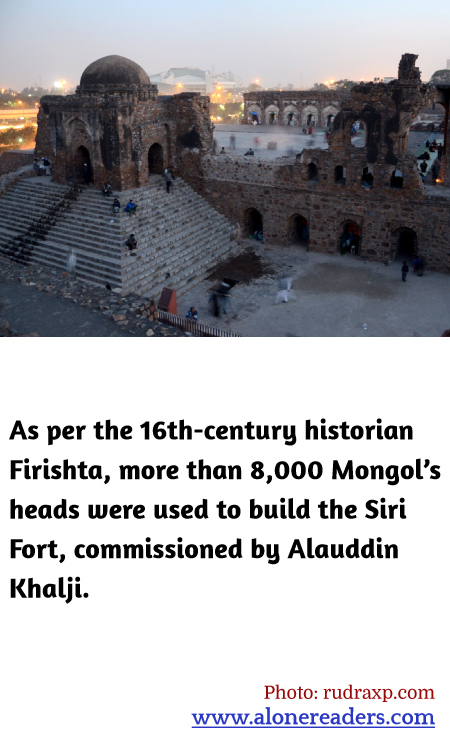
The story of Siri Fort, one of the ancient fortified cities in Delhi's rich historical landscape, is as intriguing as it is formidable. Commissioned by Alauddin Khalji, the second ruler of the Khalji dynasty of the Delhi Sultanate, this fort has its roots deeply embedded in the intense military campaigns and ambitious architectural projects of its era. Alauddin, who reigned from 1296 to 1316, is often noted for his military ambitions and administrative reforms. However, it is the construction of Siri Fort that stands out as a stark symbol of both his military prowess and his ruthless strategies in warfare.
According to historical records, particularly those described by the 16th-century historian Firishta, the fort’s construction is associated with a particularly gruesome event involving the Mongols. These records suggest that during one of the numerous Mongol invasions, Alauddin Khalji succeeded in repelling the attackers with such ferocity that he used the severed heads of over 8,000 Mongol soldiers to build the walls of Siri Fort. This act was both a psychological strategy and a grim warning to deter future invasions, reflecting the brutal measures leaders of the time often resorted to, in order to secure their territories.
The very name 'Siri', which means 'head' in Hindi, is said to be derived from this macabre construction material. The fort was built to serve as a defendable stronghold against the Mongols who were seen as a relentless threat to the nascent Delhi Sultanate. As a result, Siri Fort was not just a military bastion but also a testament to Alauddin’s determination to protect his empire at all costs, even embracing tactics that would be considered exceptionally brutal by modern standards.
Today, little remains of the original grandeur of Siri Fort, as most of it lies in ruins, with only a few segments of its walls still standing in parts of what is now South Delhi. However, the fort’s history continues to draw both tourists and historians, keen on learning about the myriad tales of bravery, strategy, and harsh realities of medieval India’s political scenario. As current generations ponder over the remains, the narrative of using enemy soldiers’ heads in building a fort underscores the intense and often brutal nature of past warfare practices, offering a stark contrast to contemporary approaches to peace and conflict. Siri Fort thus remains a significant historical site, holding within its ruins stories of power, resilience, and a reminder of the tumultuous yet fascinating history of medieval India.
