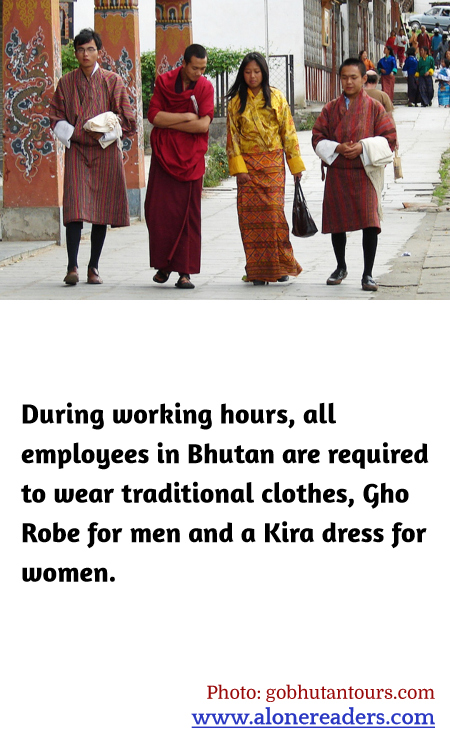
In the kingdom of Bhutan, a small landlocked country nestled in the Eastern Himalayas, there exists a unique blend of modernity and tradition. One of the most distinctive aspects of Bhutanese culture is its dress code, especially noticeable during working hours across various sectors. The traditional dress code, which mandates the wearing of national attire, embodies Bhutan's strong cultural identity and reverence for tradition.
For men, the traditional attire is the 'Gho,' a knee-length robe that is tied at the waist by a belt called 'Kera.' The Gho has a distinctive look, resembling a wraparound, which folds into a pouch at the front, traditionally used for carrying small items such as a wallet, mobile phone, or bowl. On the other hand, Bhutanese women adorn themselves with the 'Kira,' an ankle-length dress which is accompanied by a light outer jacket known as a 'Tego' with an inner layer called a 'Wonju.' This attire is elegantly draped and pinned at both shoulders, typically hand-woven with vibrant colors and intricate designs that reflect the rich textile traditions of Bhutan.
This dress code is not merely about preserving traditional costume but is also a reflection of national pride and unity. It is implemented across all formal settings, including offices, schools, and during official functions. The law stipulates that all Bhutanese citizens must wear the national dress in government offices and on formal occasions to maintain and protect the cultural heritage of the nation.
The policy has broader implications beyond just clothing. It is part of Bhutan's wider strategy to promote its philosophy of Gross National Happiness (GNH). By preserving national identity and ensuring a strong communal ethos, Bhutan attempts to balance the pressures of globalization with its traditional values. This commitment to cultural preservation is apparent in the daily lives of its people and is a source of fascination for many visitors.
Moreover, the use of traditional dress in professional settings serves as a tangible daily reminder to the people of Bhutan of their roots and values. It also provides a cohesive social fabric that might not exist otherwise in such a rapidly modernizing world. However, it's important to note that while this policy is widely supported, it also invites discussions on individual freedoms versus cultural preservation, showcasing a society that is carefully navigating between upholding traditions and embracing modern influences.
As such, the mandatory wearing of traditional dress in Bhutan during working hours is much more than a clothing rule; it is a statement about national identity, a tool for social unity, and a continued thread in the fabric of Bhutanese societal values. This policy showcases how Bhutan, despite being a small country, offers a profound example of how to preserve cultural identity in an increasingly globalized world.
