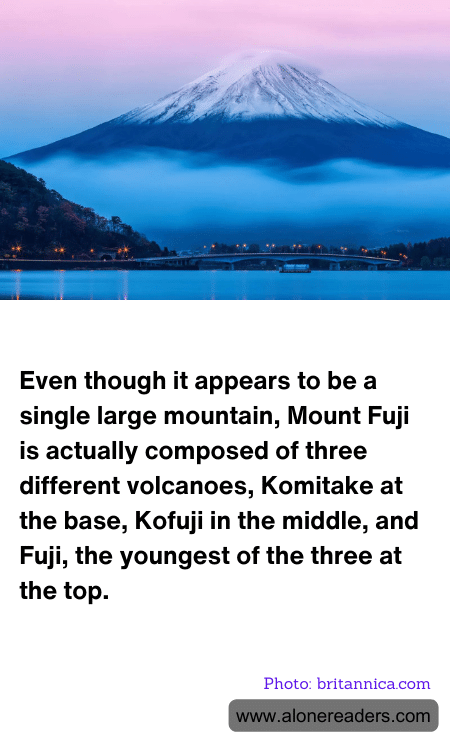
Mount Fuji, Japan's iconic symbol and highest peak, often seems like one, solitary grand mountain, but its structure is more complex than it appears. This majestic mountain is actually composed of three separate volcanoes stacked atop one another, not just a single entity as it is commonly perceived. Each of these volcanoes has played a role in forming what is today regarded as Mount Fuji, and each contributes to its grandeur and geological significance.
At the base is Komitake, the oldest of the trio. It is effectively the foundation over which the entire Mount Fuji structure stands. Starting its formation several hundred thousand years ago, Komitake laid down the first layers of this geological masterpiece. Despite being the oldest and now mostly hidden beneath the later eruptions, Komitake set the stage for the mountain's complex volcanic activities.
Sitting above Komitake is Kofuji, also known as "Old Fuji." Kofuji emerged much later and constructed itself around Komitake, adding to the mountain’s height and mass. It features a more weathered appearance, testifying to its ancient and extensive volcanic activity, which involved numerous eruptions over time. Kofuji helped thicken the base and middle sections of Mount Fuji, contributing significantly to its current profile.
The youngest and most recognizable part of today's Mount Fuji is Fuji itself, also known as "New Fuji." It is the peak that people commonly refer to when they talk about Mount Fuji. This youngest layer has actively shaped the mountain's relatively smooth, conical silhouette that is visible today. It rose over Kofuji around 10,000 years ago, and its form is a testament to the more recent phases of volcanic activity. Fuji is responsible for many of the iconic eruptions associated with the mountain, including the last recorded eruption in 1707-1708 known as the Hoei eruption.
Despite their distinct origins and unique contributions to the mountain's geography, Komitake, Kofuji, and Fuji together create the complete, complex stratovolcano known worldwide as Mount Fuji. This structure is not just a piece of natural beauty but also a fascinating subject for scientific study. Its layered formation provides crucial information about the earth's volcanic processes and the geologic history of the region. Consequently, Mount Fuji is much more than a natural marvel; it's a palimpsest of Earth's dynamic history, recorded in stone and ash.
