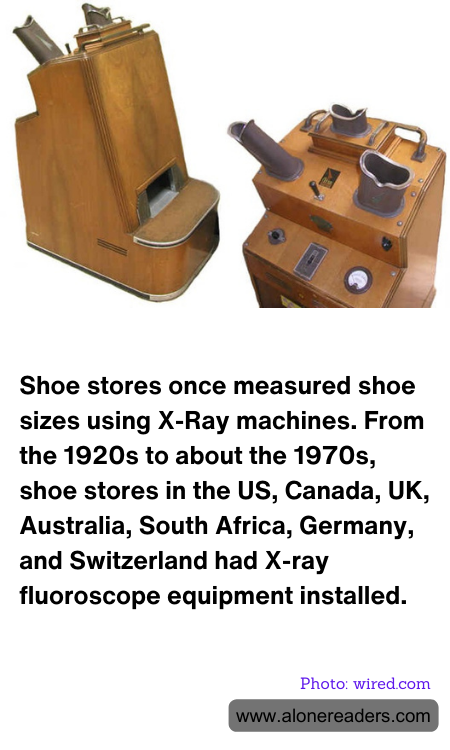
In the mid-20th century, the experience of buying shoes was markedly different from today, notably due to the use of X-ray fluoroscope machines in shoe stores. From the 1920s through to the 1970s, these devices were commonly used in various countries including the USA, Canada, the UK, Australia, South Africa, Germany, and Switzerland. The primary purpose of an X-ray fluoroscope in a shoe store was to assist customers in finding the perfect fitting shoe by providing a visual insight into how well the shoe fit around the foot, particularly the toes.
The technology, fascinating to many at the time, worked by emitting X-rays through the shoes and feet of the customer. The resulting image showed the bones of the feet and the outline of the shoes, enabling the salesperson to determine how much space there was between the foot and the shoe. The appeal was not just scientific; it was a novelty and a sales gimmick that drew customers young and old into stores for the chance to see their feet in a new, high-tech way.
However, what began as an innovative selling tool gradually came under scrutiny for health reasons. It was determined that prolonged or repeated exposure to X-rays, especially at the relatively high doses given off by these early machines, posed significant health risks, such as radiation burns and the potential for cancer. Critics also raised concerns about the lack of regulation concerning these machines; often, shoe store employees operated them with minimal understanding of safety precautions necessary to protect themselves and customers from excessive radiation exposure.
As research mounted on the dangers associated with excessive X-ray exposure, these machines saw a steady decline in use. By the late 1970s, most countries had banned or heavily regulated the use of X-ray fluoroscopes in shoe stores. This was due to improvements in the understanding of radiological health risks as well as advancements in shoe manufacturing and fitting technology, which rendered such extreme measures unnecessary.
The story of X-ray machines in shoe stores serves as an intriguing example of how technological advancements can initially seem beneficial and exciting but may later prove to be harmful without adequate understanding and regulation of new technologies. Today, the concept seems outlandish and risky, a stark contrast to the modern practices of shoe fitting that prioritize safety and rely on less invasive methods.
