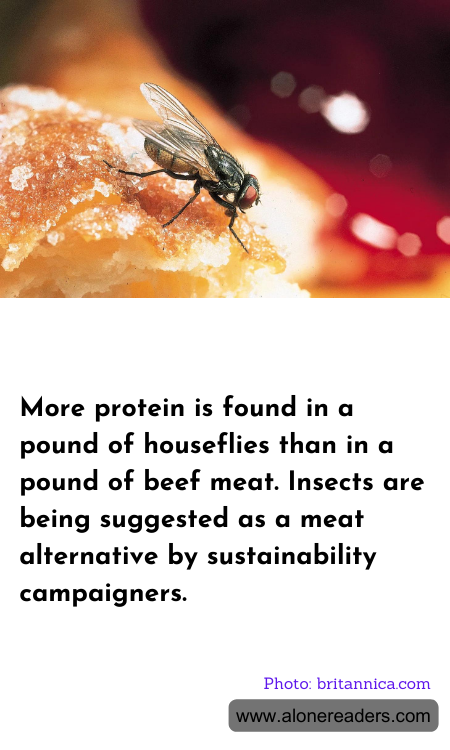
As the world grapples with the pressing challenges of sustainability and food security, an unexpected protein source is gaining traction: insects. Specifically, houseflies, among other insects, are emerging as a viable meat alternative, offering an intriguing solution to global food demands. Remarkably, studies show that a pound of houseflies contains more protein than a pound of traditional beef meat. Insects like houseflies not only boast more protein but also have a high content of essential vitamins and minerals, making them a nutrient-rich option.
The idea of incorporating insects into the diet is not new; many cultures around the world have been consuming insects for centuries. However, the concept is gaining popularity in Western societies primarily because of the environmental benefits associated with insect farming compared to conventional livestock production. Insects require significantly less land, water, and feed, and they produce a fraction of the greenhouse gases. Additionally, insects can be cultivated on organic waste, transforming by-products of agriculture and food industries into high-quality protein, thus contributing to a circular economy.
The efficient nature of insect farming aligns perfectly with the principles of sustainability. For instance, raising houseflies and other insects is an exceptionally efficient process as they reproduce quickly and in large numbers, ensuring a steady and sustainable protein supply. This could significantly reduce the strain on more traditional protein sources like beef, which is not only resource-intensive but also a major contributor to environmental issues such as deforestation and climate change.
Despite the clear benefits, the adoption of insects as a mainstream food source faces cultural and psychological barriers. In many western societies, there is a strong psychological resistance to eating insects, perceived as a survival food rather than a viable, everyday option. Overcoming this stigma is one of the biggest challenges, needing targeted educational campaigns to shift perceptions and highlight the nutritional and environmental benefits of entomophagy (the practice of eating insects).
As sustainability campaigners advocate for more environmentally friendly and sustainable eating practices, including insects as a dietary staple could be crucial. By embracing this practice, not only can we significantly mitigate the environmental impact of our food systems, but we can also ensure a high-protein food source for an ever-growing global population. Incorporating insects into the global diet might sound unconventional now, but it could very well be a cornerstone of sustainable eating in the future.
