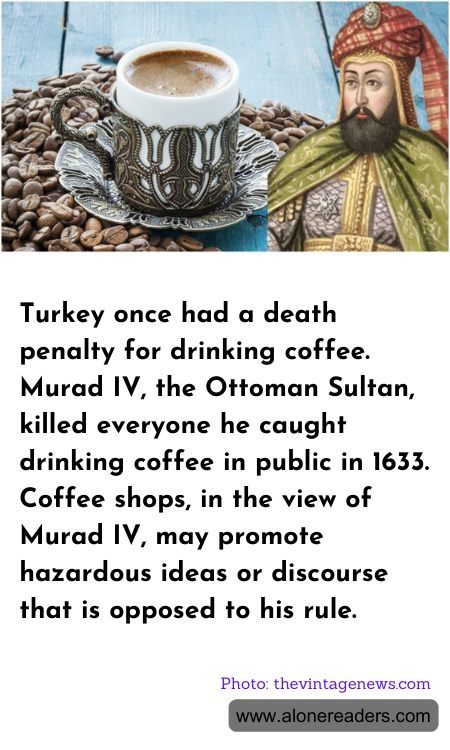
Coffee, now a ubiquitous beverage enjoyed across the globe, was once the subject of severe prohibition in Turkey under the rule of Sultan Murad IV. Ascending to power in the early 17th century, Murad IV's reign was marked by his attempts to enforce strict social control, reflecting his desire to strengthen his hold over the sprawling Ottoman Empire.
Murad IV, who ruled from 1623 to 1640, was particularly notorious for his harsh policies and methods of enforcement. Among his many edicts was the ban on coffee, which he implemented in 1633. His aversion to coffee was not merely because of the beverage itself but rather because of the social interactions it facilitated. Coffeehouses during this time were vibrant social hubs where men would gather to discuss politics, religion, and community issues.
Perceiving these gatherings as a threat to his absolute authority, Murad IV believed that coffeehouses might become breeding grounds for dissent and rebellion. The potential for subversive activities to be planned under the guise of casual discourse made these establishments a direct threat in Murad's view. To curb this perceived menace, he not only banned coffee but also imposed severe penalties on those who drank it. In fact, the sultan was known to patrol the streets in civilian clothes, and it is said that he would execute those caught in the act of drinking coffee, thereby instilling fear among his subjects to ensure compliance with his rule.
This extreme strategy was part of a larger pattern of governance in Murad's reign, which also included the prohibition of alcohol and tobacco, and severe punishments for other acts he deemed immoral or threats to his power. Such was the rigor of his rule that the era of his governance is often remembered for its brutality and strictness.
Ultimately, despite his draconian measures, the ban on coffee was not sustainable in the long run. After Murad IV’s death, the social and cultural importance of coffee and coffeehouses in Turkish society gradually led to the restoration of these beloved spaces and the widespread consumption of coffee. Today, the history of coffee in Turkey is a poignant example of how deeply ingrained cultural habits and social structures can resist even the most severe attempts at suppression, coming to thrive once again.
