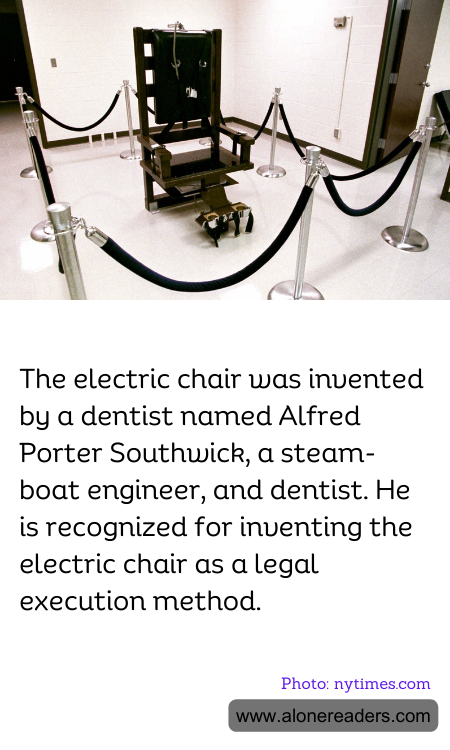
In the late 19th century, as America was exploring alternatives to the then-common methods of execution such as hanging, the electric chair emerged as a new technology fostering debates about humane ways of executing the condemned. The invention of the electric chair is credited to Alfred Porter Southwick, an individual with an unusual combination of professions: dentist and steamboat engineer. His journey toward this macabre invention was sparked by an incident that occurred during his dental practice.
Southwick's interest in electricity began after he witnessed a drunken man accidentally die quickly and seemingly painlessly after touching exposed electrical wires. This event led him to consider electricity as a potential means for execution. He speculated that it might be a more humane and less painful alternative to hanging, primarily due to the apparent instantaneousness of the death he witnessed.
After extensive research and experiments, including trials on animals, Southwick concluded that electric shock could indeed be used to execute humans swiftly and, in theory, painlessly. He then played a pivotal role in advocating the use of this method as a state-sanctioned approach to capital punishment.
In 1888, Southwick's efforts culminated in the first electrical execution apparatus, which was soon dubbed the "electric chair." His advocacy and invention led to the adoption of the electric chair by the state of New York as a sanctioned method of execution in 1889. The first execution using this method was carried out on William Kemmler in Auburn Prison in 1890, which was, regrettably, a far more gruesome affair than Southwick had intended, highlighting significant flaws in early electrical execution technology.
Nevertheless, the introduction of the electric chair marked a significant development in the history of capital punishment, as states sought more "civilized" methods of execution compared to the barbarity of hangings and firing squads. Over the years, the technology of the electric chair has been refined, although debates about its humanity and efficacy continue to prevail.
Southwick's contributions to dental surgery are less well-remembered, but his unique background as a steamboat engineer and dentist played a critical role in his ability to conceive of and develop the electric chair. His intent to create a more humane method of legal execution reflects the complexities of societal advancements and the often unintended consequences that accompany the development of new technologies. As modern societies continue to reevaluate the ethics and effectiveness of capital punishment, Southwick's invention remains a potent reminder of the intersections between technology, ethics, and law.
