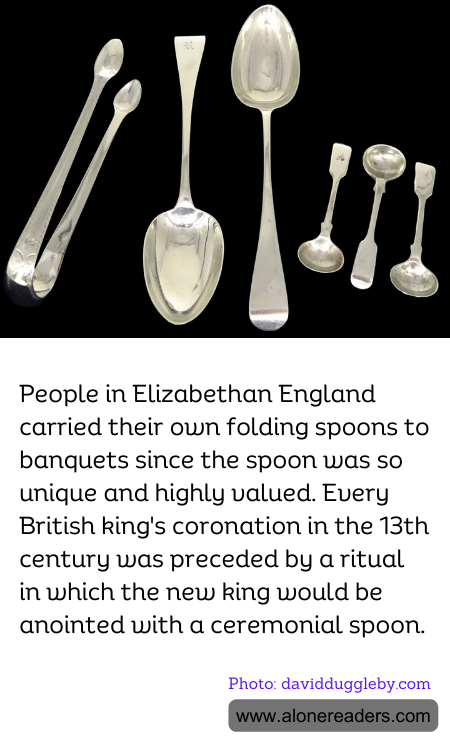
In Elizabethan England, the spoon was more than just a utensil; it was a significant personal possession often carried by individuals to banquets and feasts. Due to its unique value and the symbolic status it held, people would carry their own folding spoons as these events typically did not provide such utensils. This personal carrying of spoons can be seen as a reflection of the era's social customs and a testament to the item's importance in social gatherings.
The special significance of spoons extended beyond personal usage and into the ceremonial realms. Dating back to the 13th century, a noteworthy tradition in British royal coronations involves the use of a ceremonial spoon. This spoon, known as the Coronation Spoon, is integral to the anointing portion of the ceremony, where holy oil is applied to the new king or queen. The origin of this practice is deeply rooted in the religious and cultural symbolism of the time, emphasizing the divine right of monarchs and their sanctified role.
This use of spoons highlights the layered meanings and roles that such everyday objects could embody in historical contexts, underscoring the intricate interplay between utilitarian function and symbolic significance. The spoon thus serves as a fascinating artifact, bridging the common daily life of the populace and the sacred rites of royalty. Reflecting on these customs offers a broader understanding of how common objects are woven into the social and spiritual fabric of historical periods, revealing much about the values and practices of those times.
