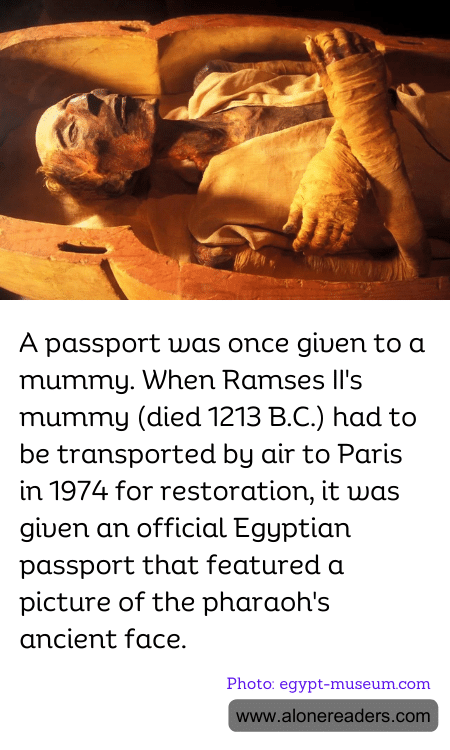
In an extraordinary melding of ancient history and modern bureaucracy, the mummy of Ramses II, one of Egypt's most powerful and celebrated pharaohs, was issued a passport over three millennia after his death. In 1974, the mummy needed to be transported to Paris for essential preservation work due to the deteriorating condition caused by fungal infections. This unusual situation prompted the Egyptian government to issue a legal passport to Ramses II, ensuring his travels met international regulations for human remains.
The passport listed his occupation as "King (deceased)" and included a photo of his mummified face, underscoring the respect and recognition still accorded to him. This was not merely a bureaucratic formality but a gesture of sovereignty and respect, emphasizing that Ramses II was still considered a potent symbol of Egypt's enduring heritage.
The issuance of the passport to a mummy illustrates the complex interplay between cultural heritage and modernity. It starkly shows how contemporary practices can serve to honor and preserve our ancient histories. Moreover, it highlights the lengths to which nations will go to ensure the respectful and secure treatment of their cultural artifacts, treating them with the same dignity afforded to living nationals. This unusual episode in the annals of Egyptian antiquities not only preserved a pharaoh's legacy but also ensured international collaboration in the preservation of human history.
