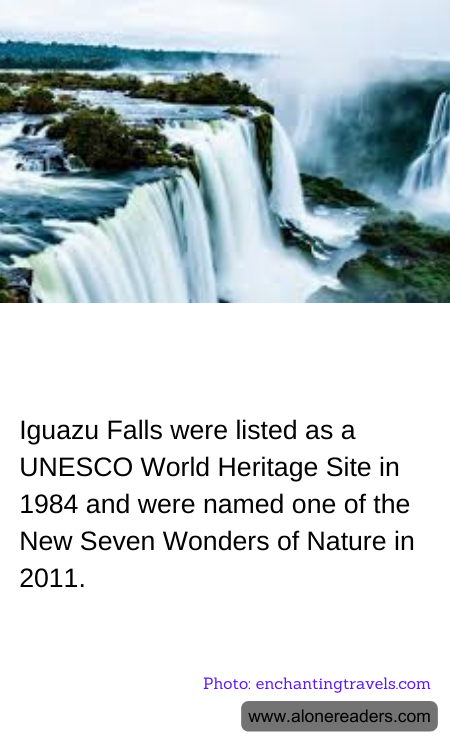
Nestled on the border between Argentina and Brazil, the majestic Iguazu Falls are a true marvel of nature. Straddling the Iguazu River, the falls system consists of approximately 275 drops that stretch for nearly 2.7 kilometers, making it one of the most expansive and awe-inspiring waterfalls in the world. This natural spectacle provides a breathtaking display of roaring water and misty rainbows, set against a backdrop of lush, verdant forest.
Iguazu Falls' recognition as a UNESCO World Heritage Site in 1984 underlines its exceptional value and global importance as a natural site. The criteria for such recognition are stringent, focusing on aspects such as ecological significance, natural beauty, and biological diversity. Iguazu Falls meets all these expectations and more, being home to numerous rare and endangered species of flora and fauna. The surrounding rainforest is rich in biodiversity, including species unique to the region such as the jaguar, the South American tapir, and various types of monkeys, which thrive in this protected ecosystem.
The international spotlight shone once more on Iguazu Falls in 2011 when it was voted one of the New Seven Wonders of Nature. This accolade was decided by global public voting, organized by the New7Wonders Foundation, which aimed to showcase the most astonishing natural beauties of the world. Being named a New Wonder underscores not only the scenic and spectacular nature of the falls but also garners further international recognition, which in turn boosts tourism and global awareness towards its preservation.
Visitors to Iguazu Falls can experience these magnificent cascades from various vantage points. On the Brazilian side, panoramic views are favored, while the Argentinian side offers a closer, more interactive experience with access to walkways that venture into the heart of the falls. The thunderous sound of the falling water, combined with the serene ambience and the abundance of wildlife, makes a visit to Iguazu Falls an unforgettable encounter with nature.
Robust efforts in conservation and sustainable tourism practices are pivotal in ensuring that Iguazu Falls remains preserved. Both Brazil and Argentina have taken significant steps to promote eco-friendly tourism, which helps in minimizing the human impact on the environment. The falls are not only a source of natural pride for both nations but also an enduring reminder of the importance of preserving such spectacular natural sites for generations to come.
In summary, the natural grandeur of Iguazu Falls, combined with its noteworthy status as a UNESCO World Heritage Site and one of the New Seven Wonders of Nature, makes it one of the most cherished and revered natural landmarks in the world. Its ecological, cultural, and visual importance continues to capture the hearts and imaginations of people from all corners of the globe, affirming its place as a true natural wonder.
