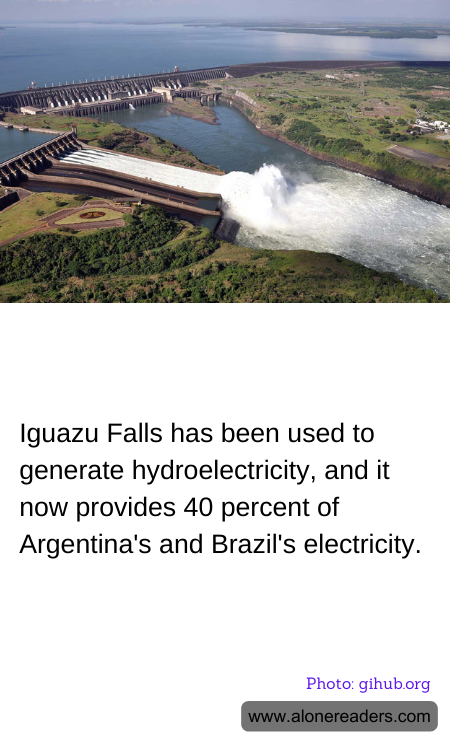
Iguazu Falls, straddling the border between Argentina and Brazil, is not only one of the most stunning natural wonders of the world but it also plays a crucial role in renewable energy generation for both countries. Contrary to common belief, however, Iguazu Falls itself is not used for hydroelectric power generation. The falls are a protected area due to their ecological and touristic importance, comprising part of the Iguazu National Park, which is a UNESCO World Heritage Site.
The confusion might stem from the presence of large hydroelectric projects in the vicinity, such as the Itaipu Dam, which is indeed a significant source of hydroelectric power for both Argentina and Brazil. Located on the Paraná River, which is upstream of Iguazu Falls, the Itaipu Dam is one of the largest dams in the world and a key asset in the energy matrix of both countries. Itaipu Binacional, the company managing the dam, states that it provides approximately 15% of Brazil’s total electricity consumption and about 90% of the electricity consumed in Paraguay (not Argentina).
This megastructure’s construction began in the 1970s and was a landmark collaboration between Brazil and Paraguay; it harnesses the energy of the Paraná River through its massive hydroelectric facility. The dam's design and operations have been optimized over the years to increase its electric output and efficiency, making it a cornerstone of sustainable energy strategy in the region.
The role of hydroelectric power in South America is vital due to the continent's abundant river systems and growing energy needs. Besides Itaipu, there are other hydroelectric projects like Yacyretá shared by Paraguay and Argentina. These developments are significant for regional cooperation and are potent examples of how natural resources can be harnessed in a way that supports economic growth while promoting sustainable practices.
In conclusion, while Iguazu Falls itself is not used for hydroelectric power generation, the region plays a vital role in the electrical output through other facilities, contributing substantially to the sustainable energy needs of Argentina, Brazil, and beyond. The distinction between the preservation of natural treasures and the utilization of geographic features for energy production demonstrates a balanced approach to both ecological preservation and technological progression.
