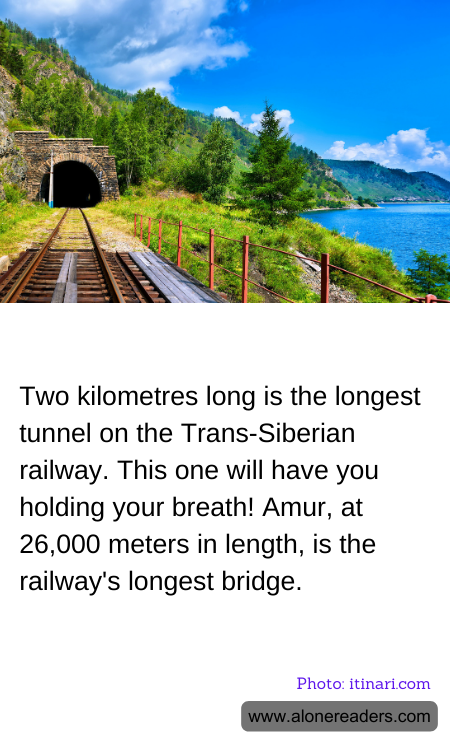
The Trans-Siberian Railway stands as an emblem of massive engineering achievements, with many impressive feats along its extensive route. Stretching over 9,288 kilometers from Moscow to Vladivostok, this railway not only traverses a vast array of landscapes but also includes some remarkable structures—one of which is its longest tunnel.
Spanning two kilometers, the longest tunnel on this railway is a marvel of engineering. Excavated through rugged terrains, this tunnel represents a crucial passageway ensuring the uninterrupted flow of both freight and passenger trains across the continent. Navigating through the tunnel can be a thrilling experience, as travelers momentarily plunge into darkness, surrounded by the weight of mountains or earth above them, only to emerge back into the sprawling landscapes of Russia.
Equally impressive is the Amur Bridge, another engineering giant on the Trans-Siberian route. This bridge claims the title as the longest on the railway, stretching an astounding 26,000 meters. It serves as a critical link over the Amur River, connecting the Russian Far East to northeastern China. The construction of the Amur Bridge not only showcases advanced engineering techniques but also plays a significant role in facilitating international trade and travel.
The combinatory efforts of these structures highlight the blend of innovation and challenge that has characterized the development of the Trans-Siberian Railway since its inception. Each stop and start from Moscow to Vladivostok encapsulates a story, a piece of history, and a testament to human endeavor. As trains continue to pass through these tunnels and bridge day by day, they carry with them the legacy of a path that connected, and continues to connect, vast and diverse territories.
