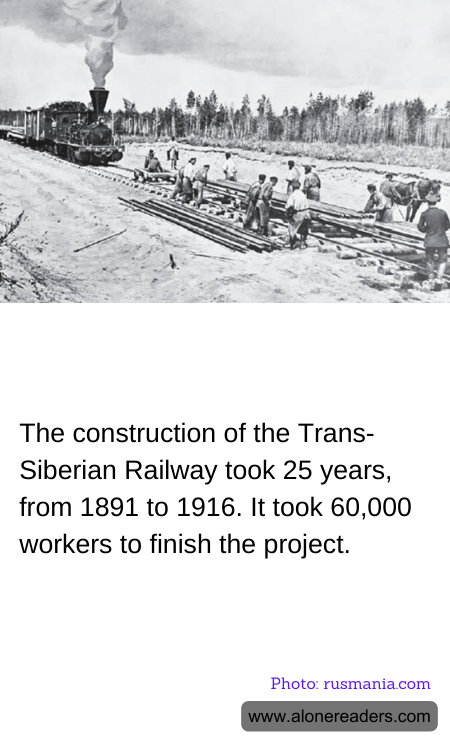
The Trans-Siberian Railway, an engineering marvel that stretches nearly 9,289 kilometers across Russia, from Moscow to Vladivostok, is one of the world's most famous railway lines. Its construction, which commenced in 1891 and concluded in 1916, represented monumental dedication, planning, and labor, involving around 60,000 workers over a 25-year period. The railway's inception was driven by the need to connect the Western part of Russia with the Eastern territories, fostering economic growth, regional integration, and improved national security.
Building this extensive network in the inhospitable and often harsh Russian landscape presented numerous challenges. Workers had to contend with dense forests, swamps, mountains, and extreme temperatures, ranging from scorching summers to frigid winters. The use of simple tools and minimal mechanical equipment meant that much of the construction relied on sheer human strength and resilience. Laborers, including soldiers, convicts, and local peasants, worked under strenuous conditions, and the construction saw periods of high mortality due to accidents, diseases, and severe weather.
Despite these hardships, the project was seen as a symbol of national pride and technological progress. Under the leadership of Tsar Alexander III and later his son Nicholas II, the government provided substantial resources to ensure the completion of the railway. Engineers deployed innovative techniques for that era, which included the construction of long bridges over massive rivers and the laying of tracks over permafrost areas, which was a significant feat of engineering.
The completion of the Trans-Siberian Railway not only transformed Russian society and the economy by linking remote regions with the major industrial centers, but it also had a profound impact on the geopolitical landscape of Asia. It facilitated increased trade and movement between Asia and Europe, and during times of conflict, it was a crucial military asset for Russia.
Today, the Trans-Siberian Railway continues to capture the imagination of travelers worldwide. It is not just a vital transport link but also a journey that showcases the vastness and diversity of Russia's landscapes and cultures. This monumental project, completed through the collective efforts of tens of thousands of workers, stands as a testament to human endurance and the transformative power of infrastructure.
