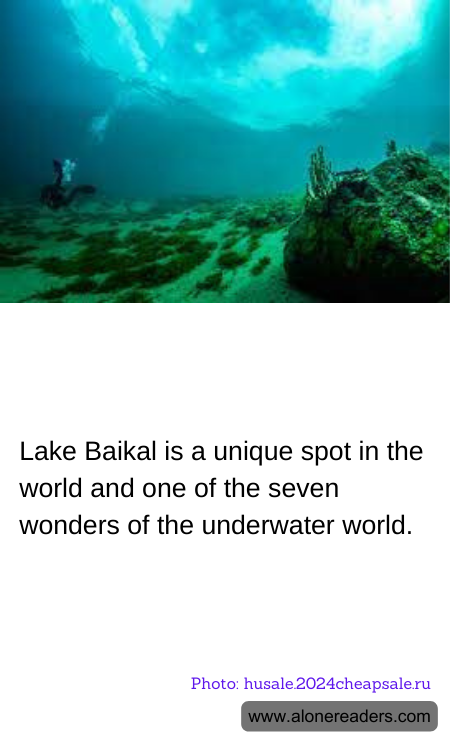
Nestled in the vast expanse of Siberia, Russia, Lake Baikal holds the title of the world's deepest and one of the most ancient freshwater lakes. With depths reaching over 1,600 meters, it contains about 20% of the world's unfrozen freshwater reserve, making this rift lake not only a natural wonder but also a critical resource.
Lake Baikal's prominence extends beyond its size and age. The lake is regarded as one of the seven wonders of the underwater world due to its unique biodiversity. This stunning lake is home to thousands of species of plants and animals, many of which, like the Baikal seal or nerpa, are found nowhere else on the planet. The lake's clear and oxygen-rich waters support a complex ecosystem, which includes more than 2,500 species of flora and fauna. Its biodiversity is so distinct that the lake is often referred to as the 'Galapagos of Russia.'
In addition to its natural beauty and ecological importance, Lake Baikal is steeped in cultural significance. The indigenous Buryat people, who inhabit areas around Baikal, have revered the lake as a sacred place for centuries. The lake and its surroundings figure prominently in their folklore, their spiritual life, and their historical narratives.
Lake Baikal also faces its share of environmental challenges. Pollution, the impact of tourism, and the effects of climate change threaten its delicate ecosystem. Concerns about water contamination from industrial pollutants and issues related to waste management from towns nearby the lake have raised alarms among environmentalists and governmental bodies.
Efforts to preserve Lake Baikal's pristine condition are in progress, with various local and international stakeholders coming together to protect this UNESCO World Heritage site. The lake's attraction continues to captivate scientists for its unique features that can offer insights into geological history and climate patterns. Moreover, adventurers and nature lovers are drawn to Baikal's breathtaking landscapes, spanning its icy surface in winter to the lush forests in the summertime. Its enigmatic beauty and ecological significance make Lake Baikal a jewel in the natural world—a wonder both above and beneath its surface.
