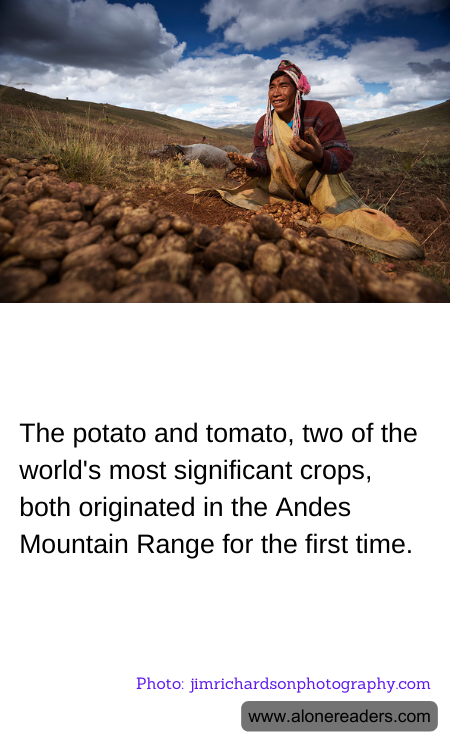
The potato and tomato, staples in global cuisine, share a common origin in the diverse ecosystems of the Andes Mountain Range. This is a remarkable fact considering their vast influence on international food cultures and economies. The potato, first domesticated in the region more than 7,000 years ago, was integral to the diet of various Andean cultures, notably the Inca Empire. Its ability to be stored for long periods and its hardiness in various climates allowed it to become a staple food for many communities.
Similarly, the tomato, although initially perceived with suspicion and primarily used as a decorative plant in Europe after its introduction, originated from the same biodiverse South American highlands. The wild versions were small, similar to cherry tomatoes, and over centuries, selective breeding enhanced their size and flavor. Today, tomatoes are indispensable to cuisines around the world, from Italian sauces to Indian curries.
The journey of both the potato and tomato from the Andes to the dinner tables around the world is a testament to the interconnectedness of our global food system. Their introduction to Europe and Asia in the 16th century marked the beginning of significant dietary shifts. The potato, for instance, became a crop that could support the burgeoning populations of industrial cities in Europe, while tomatoes eventually won over palettes with their versatility and flavor.
Agriculturally, both crops have adapted to myriad environments, showcasing a vast variety of species; potatoes with their range of colors, shapes, and sizes, and tomatoes with their many varieties, from beefsteak to heirloom. However, they also face similar challenges, such as the need for robust management to guard against pests and diseases, and the impacts of climate change on their productivity and geographical ranges.
The story of the potato and tomato is not just a tale of agricultural success. It is a reminder of how exploration, exchange, and adaptation can reshape diets worldwide. It has implications for nutritional economics and global food security, emphasizing the essential role of biodiversity in sustaining the world’s food systems. As we continue to face global challenges, understanding and preserving the origins and adaptations of such crucial crops become ever more important.
