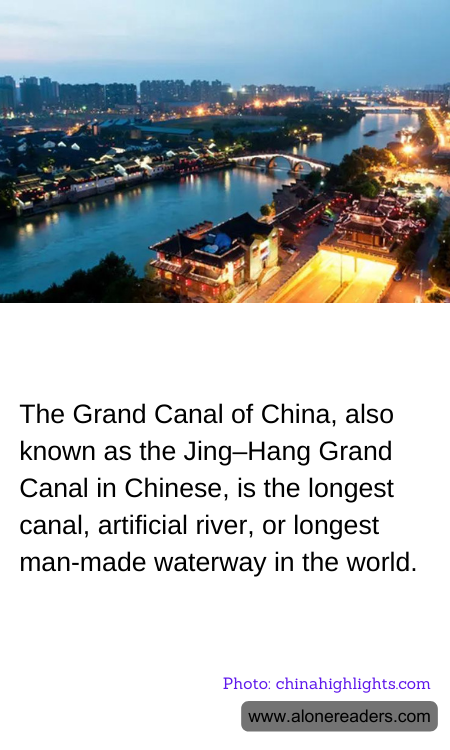
The Grand Canal of China, a marvel of ancient engineering, stretches over 1,000 miles, making it the longest canal and artificial river in the world. Known also as the Jing–Hang Grand Canal, this monumental waterway has played a critical role in China’s history, facilitating the north-south transportation of goods and integrating the rich cultural landscapes of the regions it traverses. Constructed in sections from the 5th century BC, the canal was primarily completed during the Sui Dynasty (581–618 AD) under Emperor Yang, linking the Yellow River with the Yangtze River and subsequently stimulating trade and economic development throughout ancient China.
The canal starts in Beijing and passes through major provinces such as Hebei, Shandong, Jiangsu, and Zhejiang, finally reaching the city of Hangzhou. Each segment of the canal reflects unique characteristics of the regions, from the bustling urban vistas to serene, rural waterlands, contributing to the diverse cultural tapestry of China. Over the centuries, the Grand Canal has not only facilitated the transport of grain and other agricultural products but has also been instrumental in the movement of strategic resources like timber and stone for military and construction purposes.
Cultural significance aside, the Grand Canal has also left indelible marks on Chinese literature, art, and philosophy, influencing numerous poets, painters, and thinkers over millennia. The waterway has been a recurring theme in Chinese poetry, often symbolizing the lifeline of the nation and inspiring reflective and introspective works. Additionally, the canal has served as a symbol of the unity and strength of the Chinese state, bridging diverse linguistic and cultural landscapes and promoting a cohesive Chinese identity.
Today, while parts of the Grand Canal have fallen out of heavy commercial use, the canal has seen a revival for tourism and recreational purposes. Sections of the canal have been restored and rejuvenated, highlighting ancient architecture and historical sites along its banks. The economic impact of the canal remains significant, contributing to local tourism and continuing to influence the economies of the regions it passes through. In 2014, the Grand Canal was recognized as a UNESCO World Heritage site, underscoring its global importance and historical value, preserving it as an iconic symbol of China's technological advancement and cultural wealth. Visitors to the canal can experience a blend of China's past and present, observing traditional sampans glide over the water against a backdrop of modern cities and age-old villages, each telling their own stories of a waterway that shaped a civilization.
