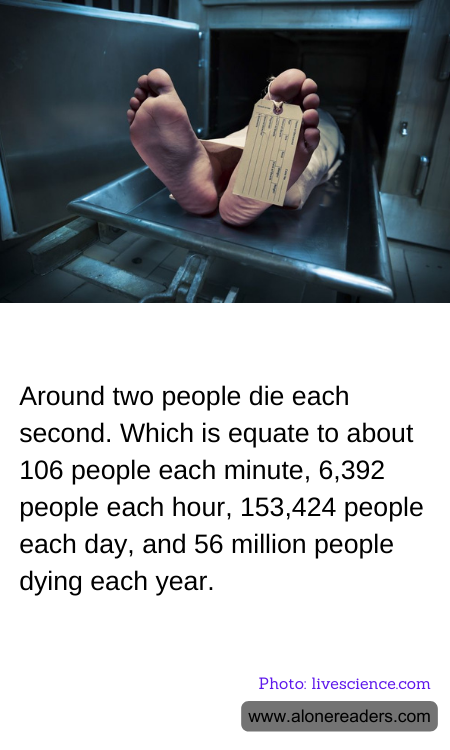
Death, a universal and inevitable aspect of life, impacts the human population at a continuous but often underappreciated rate. With an estimated two individuals succumbing every second, the rhythm of passing lives can seem both incessant and overwhelming when measured across larger spans of time. On a minutely basis, this rate translates to approximately 106 deaths. When extrapolated to an hourly count, the figure escalates to around 6,392, culminating in a daily total of 153,424 lives lost globally.
Over the course of a year, this continual departure accounts for about 56 million deaths. This massive figure highlights not only the brevity and fragility of human life but also the scale at which populations renew and change over time. These statistics also bring to light the numerous causes that contribute to mortality rates which range from health-related issues and diseases to accidents and natural disasters. Each number in these statistics represents a unique life, with its own story, family, and impact left behind.
Population dynamics, including mortality rates, are crucial for understanding various aspects of societal structure and development, such as the allocation of health resources, planning for retirement benefits, and the creation of support structures for bereavement. They also influence broader discussions on public health policies, medical research funding priorities, and international aid.
Behind each statistic is a reminder of the universal reality of mortality, something every person shares, regardless of their differences. It underscores the importance of addressing global health disparities and enhancing the quality of life and medical support.
Understanding these figures can foster a greater appreciation for life and the diverse factors that influence its preservation and termination. Such knowledge is essential not only for policymakers and public health officials but for anyone interested in the facets of human existence and the global community's well-being. As somber as these statistics may seem, they are a crucial component of comprehending the flow of human life and ensuring future populations can lead healthier and hopefully longer lives.
