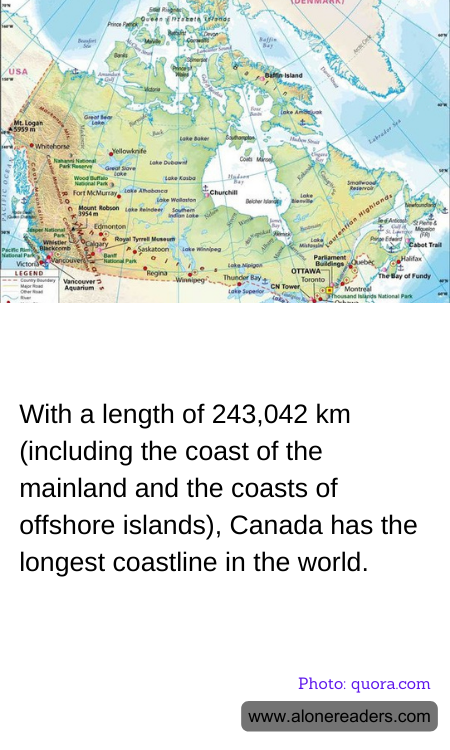
Canada's extensive coastline, which totals 243,042 kilometers when including the mainland and offshore islands, holds the record for being the longest in the world. This immense length is primarily due to Canada's geographical layout, featuring a vast array of bays, inlets, fjords, and islands, especially in regions like the Arctic Archipelago.
This expansive coastline is more than just a geographical feature; it plays a crucial role in Canada’s identity, economy, and environmental stewardship. Economically, the coastline supports a robust maritime sector, including shipping, fisheries, and tourism, which are vital components of local and national economies. Various towns and communities along these coastal areas largely depend on these industries for their livelihoods, making the coastline integral to their economic sustainability.
Environmentally, Canada’s coastline is rich with biodiverse ecosystems, home to unique wildlife and marine species that are not found anywhere else on the planet. This includes various species of whales, seabirds, and the iconic polar bears of the Arctic regions. The health of these ecosystems is a prime concern, not only for conservationists but also for the government, which strives to balance development with environmental protection.
Furthermore, the extensive coastline offers recreational and cultural benefits for Canadians and visitors alike. From the rugged cliffs of Newfoundland to the rainforests of British Columbia, the natural beauty attracts millions of tourists annually. Indigenous communities along these coasts also maintain deeply rooted connections with the land and the sea, underscoring the cultural significance of these natural landscapes.
Despite its beauty and benefits, managing such a vast coastline comes with its set of challenges, including vulnerability to climate change. Rising sea levels, increased coastal erosion, and melting Arctic ice are some of the pressing environmental issues that the Canadian government and environmental groups are actively addressing.
In summary, while Canada’s coastline is a remarkable natural asset that offers economic, environmental, and cultural wealth, it also presents a need for careful management and conservation to ensure that it remains vibrant and healthy for future generations. This balance is key to preserving one of the country's most valuable and beautiful resources.
