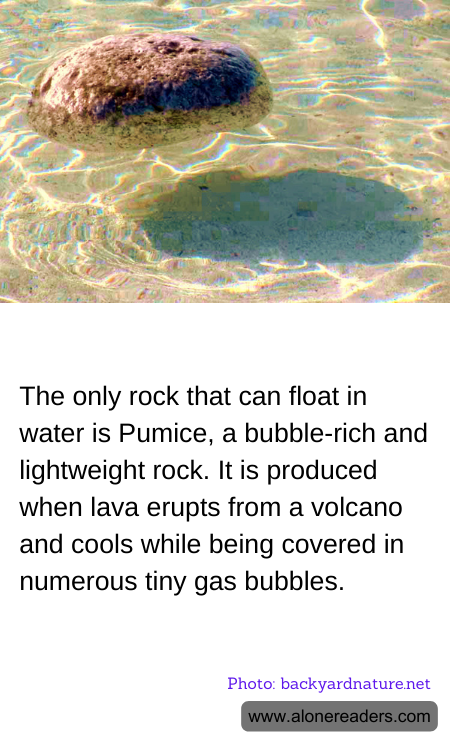
Pumice is a unique volcanic rock, notable for being the only rock that can float in water. This unusual feature is due to its lightweight and porous structure, which is full of tiny gas bubbles. Pumice forms during explosive volcanic eruptions when super-heated, highly pressurized rock is violently ejected from a volcano. As the lava hurtles through the air, it cools and solidifies rapidly. During this rapid cooling process, gases trapped within the molten rock form bubbles that become locked into place, creating the sponge-like texture that pumice is known for.
The composition of pumice varies depending on the particular mix of minerals in the magma from which it originates, but it is primarily composed of silica (SiO2), which gives it a light, glassy texture. This highly vesicular rock not only floats but is also used widely in industry and consumer products. Due to its abrasive nature, pumice is used in polishes, pencil erasers, and the production of stone-washed jeans. It is also used in construction, mixed into cement for lightweight concrete blocks and as an additive in cements to give them a lighter weight.
In the realm of personal care, this rock finds its applications as an exfoliating tool, helping to remove dead skin and calluses, particularly on the feet. Its natural abrasiveness makes it perfect for skin care products that aim to rejuvenate and smooth skin texture.
Environmental scientists and engineers have also explored the use of pumice for ecological projects, such as water filtration and stormwater management, due to its ability to trap contaminants and its permeability. This allows water to drain through while trapping sediments and pollutants.
Overall, pumice is a fascinating example of how natural events such as volcanic eruptions can produce materials with unique properties and practical applications that can be harnessed in a variety of ways to serve many aspects of human life.
