Tattoos remain a fascinating form of body art due to their permanence, a characteristic facilitated by the intricacies of the human immune system. When a person receives a tattoo, the ink is injected into the dermis, the second layer of skin. This layer is significant because it is stable, unlike the epidermis above it, which continuously sheds skin cells. Once the ink is in the dermis, it's there to stay, but not without some interesting biological interactions.
The key players in keeping tattoo ink in place are immune system cells known as macrophages. These cells are part of the body’s defense system against foreign invaders. When tattoo ink penetrates the skin, it is perceived as a foreign substance, prompting macrophages to spring into action. They rush to the site and engulf the ink particles in an attempt to clean up and heal the area. Normally, macrophages would carry foreign particles to the lymph nodes, effectively removing them from the skin. However, tattoo ink particles are too large to be completely removed, so many remain trapped in the dermis.
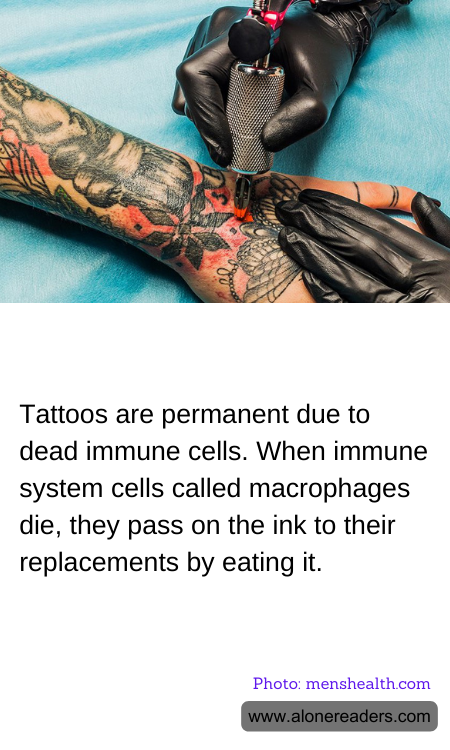
Curiously, the permanence of tattoos is partly due to the lifecycle of the macrophages themselves. When these ink-filled macrophages eventually die, their contents, including the ink, could be released and could potentially diffuse through the dermal layer, fading the tattoo. Instead, new macrophages come in to consume the released ink, effectively "eating" the old ink. This cycle—where old, ink-filled macrophages die and are replaced by new ones that pick up the released ink—helps maintain the vibrancy and definition of the tattoo.
Over years, however, the tattoo may still fade. This fading occurs for two reasons. Firstly, as macrophages die, some minute amounts of ink are indeed lost over decades. Secondly, environmental factors like sun exposure can break down the ink particles. This leads to a gradual dispersion and fading of the tattoo, which is why older tattoos might look blurred or lighter than they originally did.
Understanding the role of macrophages in tattoo longevity gives us greater insight into why tattoos are so durable and what might be done in future to improve tattoo procedures and removal techniques. For example, targeting macrophage behavior or applying technologies that break down ink particles into smaller fragments could revolutionize how tattoos are both applied and removed. This dynamic interaction between art and immunology not only keeps the canvas of our skin artfully decorated but also highlights the complexity of our body's responses to enduring modifications.
