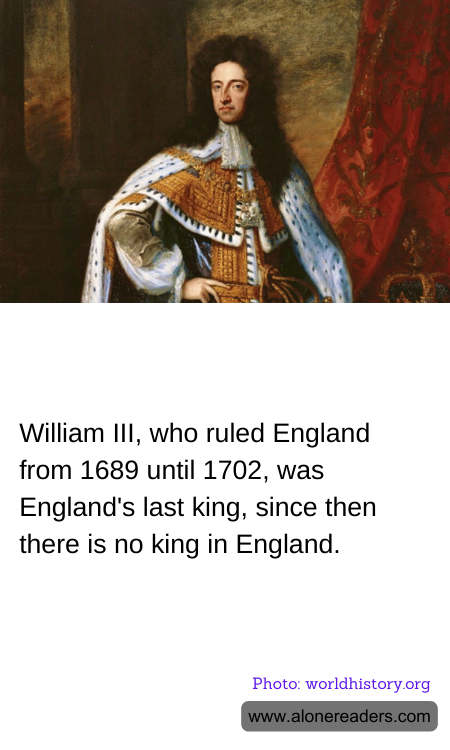
William III of England, also known as William of Orange, ascended to the English throne in the wake of the Glorious Revolution, which saw the deposition of James II. William ruled jointly with his wife, Mary II, from 1689 until her death in 1694 and then alone until his own death in 1702. However, contrary to the assertion that William III was the last king of England, the English monarchy continued after his death.
Following William's demise, the crown passed to Anne, Mary’s sister, who ruled until 1714. After Anne's death, the Act of Settlement 1701 ensured the Protestant succession, passing the crown to George I of the House of Hanover, marking the beginning of modern Britain's constitutional monarchy. This Act was crucial in shaping the succession away from Catholic claimants and ensuring a Protestant line of monarchs.
The misperception that William III was the last king likely stems from a misunderstanding of the terms "England" and "Britain." Post-1707, after the Acts of Union united England and Scotland into a single sovereign state, the title transformed from King of England to King of Great Britain. Subsequent monarchs, including the well-known figures such as George III during the American Revolutionary War, Queen Victoria in the 19th century, and currently Queen Elizabeth II, all ruled or rule as monarchs of Great Britain and later the United Kingdom after the inclusion of Ireland and later just Northern Ireland.
Therefore, it’s more accurate to say that William III was one of the last monarchs of England exclusively before the formation of Great Britain. His reign, nonetheless, was marked by significant events such as the establishment of the Bank of England and the War of the Spanish Succession. His legacy also includes his role in consolidating the power of Parliament over the monarchy, setting the stage for the modern British constitutional monarchy.
