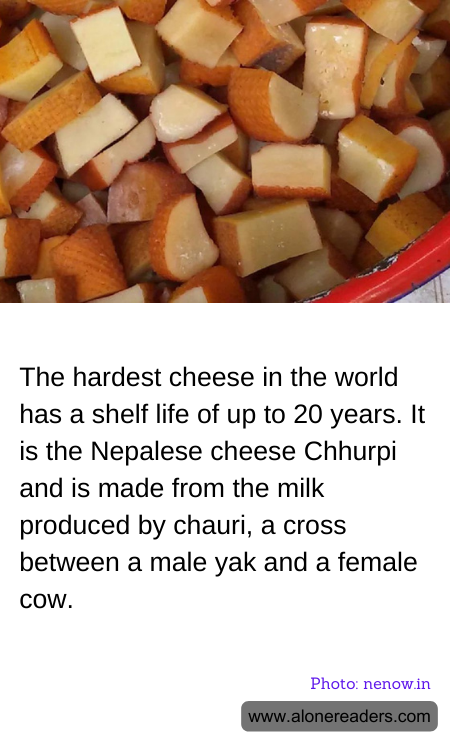
Among the plethora of cheese varieties produced globally, Chhurpi stands out not only for its unique origin but also for its impressive longevity. Originating from the mountainous regions of Nepal, Chhurpi is renowned as the hardest cheese in the world, with a shelf life that can extend up to 20 years when stored properly. This extraordinary durability makes it an essential source of nutrition for the local Himalayan people, supporting them through harsh winters and scarce food supplies.
Chhurpi is crafted using the milk from chauri, a hybrid animal that is a cross between a male yak and a female cow, locally known as a "nak." These animals are well-suited to the high altitudes and rugged terrains of the Himalayas, making them an integral part of the region's agricultural practices. The process of making Chhurpi involves allowing the raw milk to ferment slightly before it is curdled using a natural coagulant. The curds are then pressed and dried for several months to over a year, resulting in a hard, dense cheese that is rich in protein.
The texture and flavor of Chhurpi are quite distinctive; initially, it is incredibly tough and chewy, and it can be difficult to bite through. Locals often keep a piece of Chhurpi in their mouth for hours, much like a lozenge, allowing it to slowly rehydrate and release its subtle, nutty flavors. This method not only provides a slow release of energy and nutrients but also aids in keeping the mouth moist and the breath fresh during long journeys or laborious tasks.
Despite its regional origins, Chhurpi has garnered attention worldwide, particularly among adventurers and survival experts who admire its longevity and nutritional benefits. For the locals, however, Chhurpi is more than just a food item; it is a vital part of their tradition and survival, a testament to their resilience and their ability to thrive in one of the world’s most challenging environments. As global interest in traditional and sustainable food practices grows, Chhurpi stands as a remarkable example of how age-old techniques can yield products that are both sustainable and nutritionally valuable, suited perfectly to the needs of their environment.
