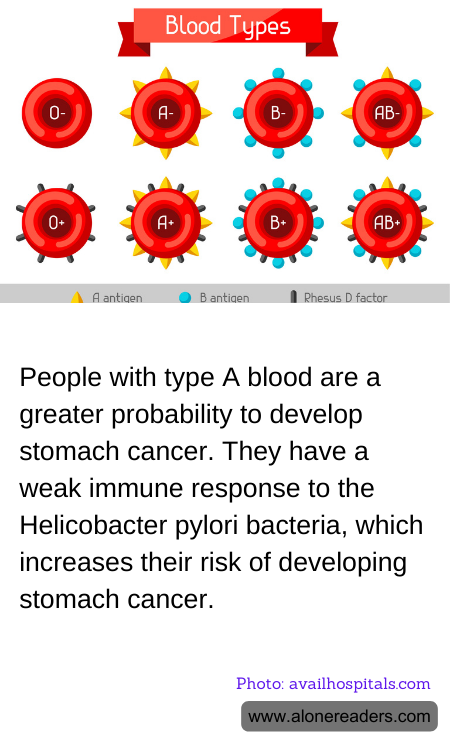
Stomach cancer, a serious health concern worldwide, manifests a peculiar correlation with blood type, particularly type A blood. Research has shown that individuals with type A blood are at a higher risk of developing stomach cancer compared to those with other blood types. This connection primarily hinges on the interaction between type A blood individuals and the Helicobacter pylori (H. pylori) bacterium, a common yet potentially dangerous organism found in the stomach.
H. pylori infection is widespread and, in many cases, asymptomatic, but its presence is a known risk factor for several gastrointestinal diseases, including gastritis, peptic ulcers, and notably, stomach cancer. The bacterium can lead to chronic inflammation of the stomach lining, which, over time, can result in gastric cancer. The risk escalates significantly among those with type A blood, due to their immune system's peculiar response to H. pylori.
The underlying reason for this increased susceptibility lies in the molecular mimicry and immune system recognition. Individuals with type A blood have specific antigens on their red blood cells that somewhat resemble structures found on the surface of H. pylori. This similarity may confuse the immune system, leading to a less aggressive immune response against H. pylori. Consequently, weaker immune combat against H. pylori permits the bacteria to persist in the stomach, causing prolonged inflammation and increasing cancer risk.
Further complicating matters, the immune response in type A individuals not only fails to eradicate the bacteria effectively but also can contribute to a harmful level of chronic inflammation. Over years, this unchecked inflammation can lead to changes in the stomach lining, eventually progressing to cancerous growths.
Nonetheless, it's crucial to recognize that having type A blood does not doom an individual to develop stomach cancer. It merely represents one of many risk factors. Lifestyle choices, dietary habits, genetic predispositions, and environmental factors also play significant roles in the development of this disease. Measures such as maintaining a healthy diet, avoiding smoking, limiting alcohol consumption, and managing stress can help mitigate the risk.
In conclusion, the peculiar vulnerability of type A blood individuals to stomach cancer highlights the complex interplay between genetics and disease. It provides a valuable insight for medical research and potential preventive strategies. Understanding and exploring these connections further could lead to more personalized and effective approaches in treating and preventing stomach cancer, particularly in high-risk populations.
