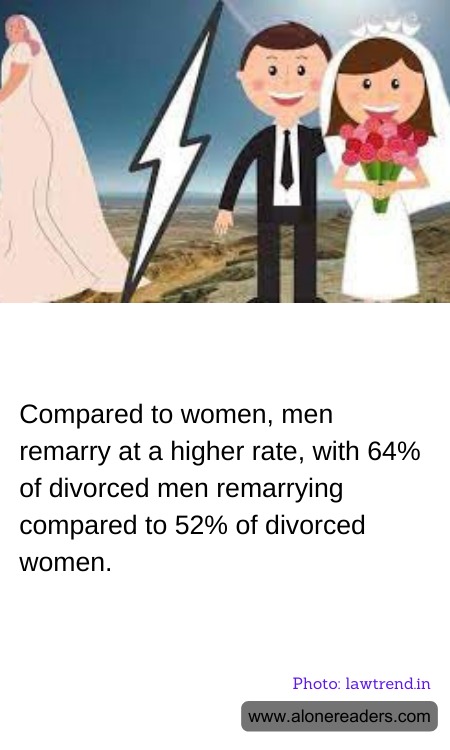
In the intricate dance of relationships and marriage, the dynamics of remarrying show a striking gender discrepancy. Statistics reveal that men are more likely to step into wedlock again after a divorce, with 64% of divorced men remarrying as opposed to 52% of divorced women. This disparity opens a window into the complex social and emotional fabrics that influence the decisions of divorced individuals when it comes to remarriage.
Various factors contribute to this trend. Social and psychological motivations play a significant role in the higher remarriage rates among men. Often, men are encouraged to remarry by their desire for companionship, support systems, and, in some cases, financial stability. Society sometimes views men as less capable of fulfilling domestic roles and parenting duties on their own, which pushes them towards finding a new partner more quickly than women.
Women, on the other hand, although equally desirous of companionship and love, might be more cautious about entering a new marriage. Many women take a longer time to remarry due to the increased likelihood of having custody of children, which can limit their ability to seek out new relationships. Furthermore, women often evaluate their previous marriage experiences more critically and may prioritize achieving personal goals or improving their individual circumstances before choosing to remarry.
Economic factors also play a significant role. Men typically benefit more from the economies of scale that marriage can provide, such as shared living expenses and dual incomes, which can be especially appealing to divorced men who may have faced financial strain following their separation. On the other hand, women, especially those who work and are financially independent, might not feel the economic pressure to remarry as strongly as men do.
Moreover, cultural expectations and dating opportunities also influence this trend. Older men often seek younger partners, broadening their pool of potential spouses. In contrast, older women might find their pool of eligible partners smaller, as societal norms can be less accepting of older women dating younger men or of women who have children.
While a variety of factors contribute to why divorced men remarry at a higher rate than women, it's important to recognize that personal and subjective elements deeply affect individual decisions about remarriage. Whether driven by love, loneliness, societal expectations, or practical considerations, the paths to re-partnering are personal and unique to each individual's circumstances and desires. Ultimately, understanding these trends helps in appreciating the different emotional journeys individuals embark on post-divorce as they navigate the prospects of new beginnings in their personal lives.
