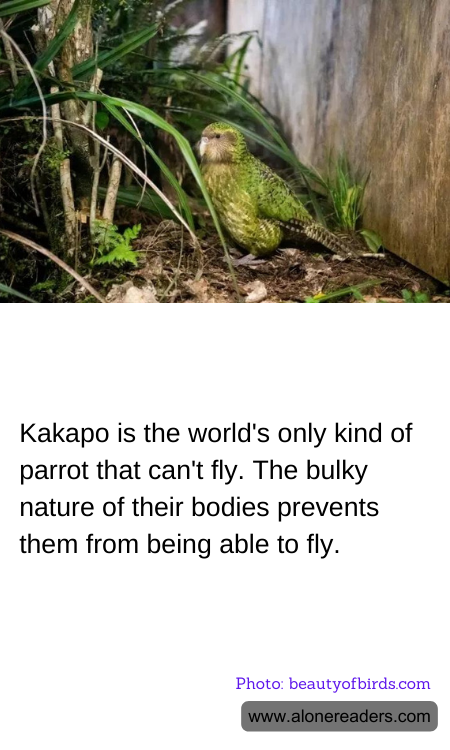
The Kakapo, also known as the night parrot or the owl parrot, is one of the most unusual species of parrots found in the world. Native to New Zealand, this bird is distinctive not only for its inability to fly but also for its nocturnal behavior and its heavy, rounded body. Kakapos are the world’s heaviest parrots, with adults weighing up to 4 kilograms (about 9 pounds), which contributes to their flightlessness.
The flightlessness of Kakapos can be attributed to evolutionary adaptations to their predator-free environment. Without ground-based predators in their ancestral habitat, the Kakapo did not need to take flight to escape threats, allowing them to evolve a more ground-oriented lifestyle. Their wings are relatively short and underdeveloped for their size, sufficient only for controlled descents and to aid balance rather than for flight. Instead, they are excellent climbers, using their strong legs and clawed feet to ascend trees, where they can feed on the leaves, seeds, fruits, and plant matter that make up their herbivorous diet.
The conservation status of the Kakapo is critical, with the species currently listed as critically endangered. When humans settled in New Zealand, they brought with them predators such as cats, rats, and stoats, which the Kakapos had no natural defenses against. This, coupled with habitat destruction and hunting, led to a catastrophic decline in their population. By the 1990s, fewer than 50 Kakapos were left in the wild.
In response to this dire situation, the New Zealand government initiated an intensive conservation effort known as the Kakapo Recovery Programme. The birds were relocated to predator-free islands, where their habitat is maintained and monitored. Breeding programs have also been a crucial part of the recovery efforts, assisted by the implementation of innovative techniques such as hand-rearing chicks and using supplemental feeding to improve the health of adult birds.
Conservationists are cautiously optimistic about the future of the Kakapo, as their numbers have slowly increased, demonstrating that dedicated, science-based conservation efforts can indeed make a real difference in the survival of a species. The Kakapo serves as a poignant symbol of both the fragility of ecological balance and the possibility of redemption through concerted human effort. The ongoing story of the Kakapo is a compelling reminder of the impact humans have on the natural world and the responsibilities we hold in safeguarding its future.
