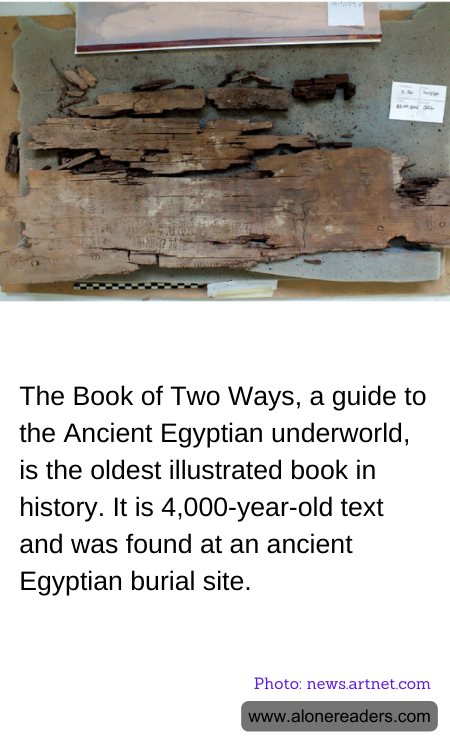
The Book of Two Ways is a fascinating artifact from ancient Egypt, known for being the oldest illustrated book in history. This 4,000-year-old text serves as a guide to the underworld, providing the deceased with knowledge on how to navigate the afterlife. Its discovery at an ancient Egyptian burial site offers invaluable insights into the religious beliefs and practices of one of the world's earliest civilizations.
The text itself is part of a larger corpus of funerary texts, which also includes the more famous Book of the Dead. However, The Book of Two Ways is unique in its focus on mapping out two routes that the soul of the deceased could take to reach Rostau—the realm of Osiris, the god of the afterlife. These routes, one by land and one by water, are detailed with descriptions of gates, guardians, and other challenges the spirit would face.
The illustrations in The Book of Two Ways not only served a functional purpose, guiding the deceased through their journey, but they also provide modern scholars with clues about how the ancient Egyptians viewed the afterlife and their worldview. The detailed depictions highlight a belief system imbued with a mix of magic, religion, and mythology, closely tied to the natural and supernatural worlds.
The discovery and translation of The Book of Two Ways enhance our understanding of ancient Egyptian literature and religious thought. Its preservation in burial sites underscores the Egyptians' concern with the afterlife and their desire to provide the deceased with all the necessary tools for the journey after death. This text exemplifies the combination of art, religion, and literature in ancient Egyptian culture, and its legacy continues to intrigue and inform scholars and enthusiasts around the world.
