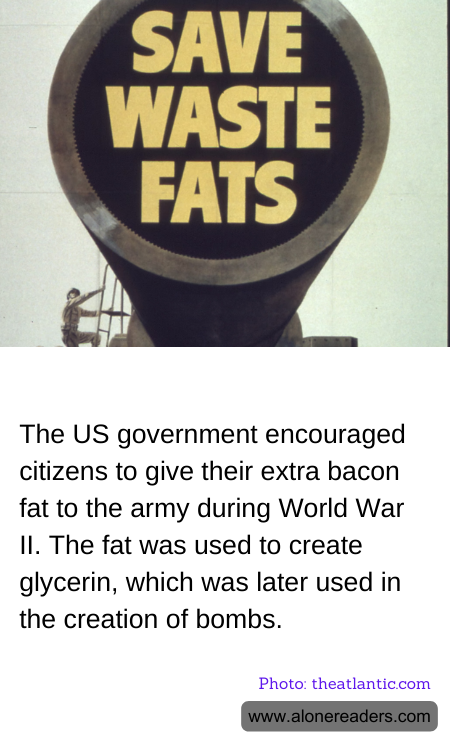
During World War II, the American home front was characterized by a spirit of collective sacrifice and contribution towards the war effort. One of the lesser-known, yet fascinating aspects of this home front effort was the collection of bacon fat by the U.S. government. Citizens were encouraged to save their excess bacon grease and turn it into collection centers where it played a surprisingly crucial role in the manufacture of military supplies.
Bacon fat, when rendered, produces glycerin, a compound that was critical to the war effort. Glycerin is a key component in the production of nitroglycerin, which is an essential ingredient in dynamite and other explosives. With the war escalating, the demand for explosives surged, necessitating increased production of glycerin. Conventional sources of glycerin from the industrial processing of soybeans and other fats could not meet this demand alone. Consequently, household fats became a vital supplement.
Government campaigns were launched to educate and encourage citizens to contribute to the initiative. Posters, advertisements, and radio broadcasts highlighted how everyday Americans could aid the war effort by simply turning in cooking fat at their local butchers or collection depots. These fats were then transported to factories to be processed into glycerin.
In return for their contributions, citizens often received a small financial compensation, further incentivizing the practice. Beyond the practical impact of providing essential materials for war production, these campaigns also had psychological benefits, boosting civilian morale by providing individuals with a direct and tangible way to contribute to the war effort.
This collection effort is just one example of how diverse and widespread civilian involvement in wartime production was during World War II. From growing victory gardens to recycling metal and rubber, American citizens of all ages and backgrounds were called upon to contribute to a collective effort much larger than themselves. The story of bacon fat collection for glycerin production highlights the innovative and communal approaches taken to secure victory, reflecting a period when personal sacrifice was intimately linked to national success in the global conflict.
