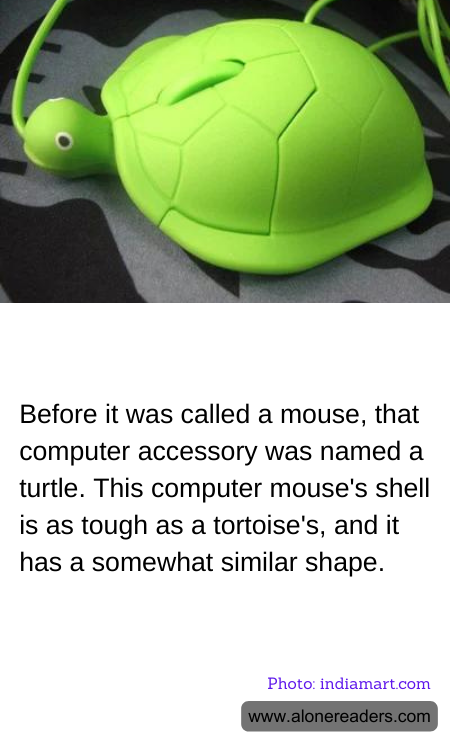
Before the ubiquitous computer mouse became a staple on desks everywhere, it was originally referred to as a "turtle." This analogy was rooted in its appearance and durability, comparable to the hard shell of a tortoise. The early iterations of the computer mouse bore a notable resemblance to these resilient creatures, not only in their rounded shape but also in their robust construction designed to withstand extensive use.
The transformation from "turtle" to "mouse" is fascinating and reflects the evolution of computer technology and terminology. The name change was influenced by the device's cable, which resembled a tail, and thus the more endearing term "mouse" stuck. As technology progressed, the mouse underwent significant transformations in design and functionality, moving from a simple rolling device to the sophisticated laser and optical mice we use today, which offer precision and ease of use that early models could not provide.
Nevertheless, the original design concept as a turtle reminds us of the practical and aesthetic considerations that shape tech devices. The initial robustness of the mouse, akin to a tortoise shell, set a standard for the durability and reliability expected of computer peripherals. This foundation has played a crucial role in the development of user-friendly and long-lasting hardware that meets the vigorous demands of modern computer usage. As we continue to navigate through digital spaces with the click of a mouse, the genesis of this critical tool serves as a reminder of how far technology has come and how seemingly small innovations can make significant impacts on our interaction with digital environments long-term.
