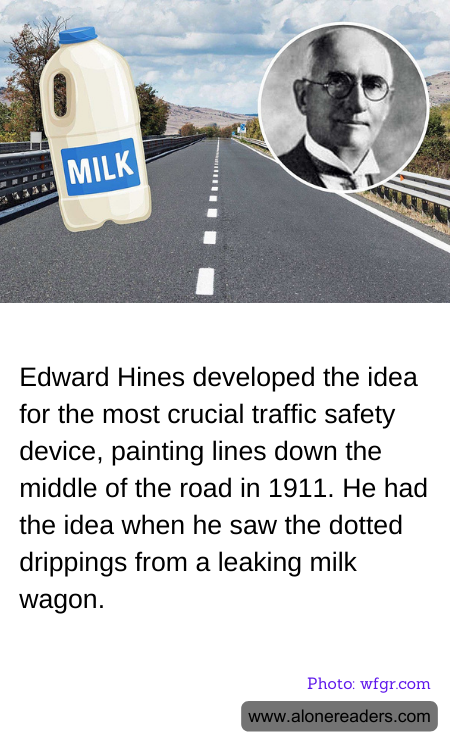
The simple yet transformative idea of painting lines down the center of roads, a concept now fundamental to road safety worldwide, has a rather humble origin. Edward Hines, a lumberman and road commissioner from Michigan, is credited with this ingenious invention which dates back to 1911. The inspiration struck him in an unlikely manner—through an observation of a milk wagon. As the story goes, Hines noticed the trail of drippings from a leaking milk wagon as it traveled along a road. The dots formed by the spilled milk created a virtual path that intuitively guided other drivers along the road, suggesting a method for dividing lanes and thus improving road safety.
Recognizing the potential of these accidental markings, Hines conceptualized the idea of using painted lines to systematically divide traffic lanes, facilitating a more organized and safer flow of vehicles. This was at a time when automotive travel was burgeoning, and the rules of the road were few and far from standardized. The rapid increase in motor vehicles led to chaotic road conditions, and the need for regulation and safety mechanisms became clear. Hines' idea was a pioneering step in this direction.
The first documented use of this concept was on what is now known as Woodward Avenue in Detroit, Michigan. The initial implementations were simple, yet they marked a significant advancement in traffic management and safety. By clearly defining the lanes, the painted lines reduced the risk of collisions and helped maintain a smoother flow of traffic. This innovation not only significantly dropped the number of accidents but also set a precedent for traffic management that would eventually be adopted globally.
Today, road markings include a variety of lines and symbols to regulate traffic and convey important information to motorists and pedestrians. From dashed and solid lines to pedestrian crosswalks and stop markers, these visual cues are indispensable for road safety. The guidelines and regulations surrounding road markings have evolved and expanded significantly, becoming an essential discipline within urban planning and traffic management.
The impact of Edward Hines' observation and subsequent innovation extends beyond mere traffic management. It reflects a critical aspect of technological and social change—how a simple, observant insight can lead to a revolutionary and life-saving advancement. It is a testament to how attentiveness to everyday occurrences can unveil solutions to problems that affect millions daily. The painted lines on our roads are a reminder of how innovation can stem from the most ordinary circumstances, transforming basic public safety in profound ways.
