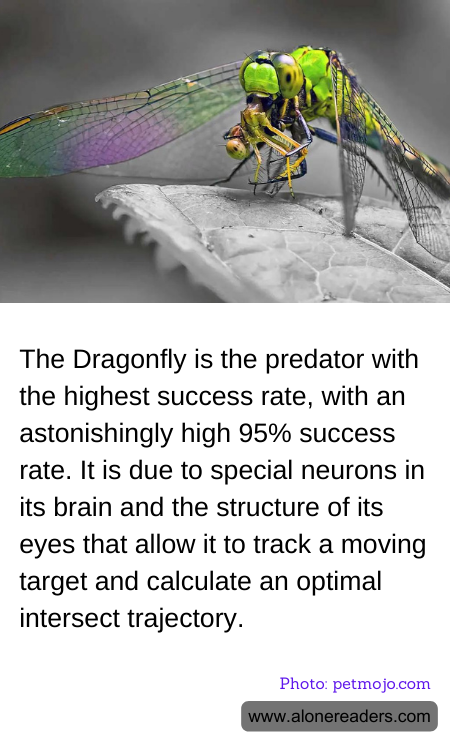
The dragonfly is a remarkable predator, boasting an impressive 95% success rate in hunting, the highest among all predators. This extraordinary efficiency isn't just a matter of speed or agility, though the dragonfly excels in both. It also stems from their advanced neurological and optical adaptations that enable them to perform complex aerial maneuvers to capture prey with near-perfect precision.
Central to the dragonfly's hunting prowess are specialized neurons known as the "target-selective descending neurons" or TSDNs. These neurons are aptly named for their role: they process visual information and help the dragonfly discern which moving object in its environment is the target. Once a target is selected, TSDNs help in calculating the speed and trajectory necessary for interception, allowing the dragonfly to adjust its path mid-air and capture the prey with stunning accuracy.
Moreover, the structure of a dragonfly’s eyes contributes significantly to its hunting success. Dragonflies are equipped with compound eyes—giant, bulbous structures that can consist of up to 30,000 individual lenses. This multifaceted eye design provides them with a near 360-degree view of their surroundings, which means they can perceive movements from almost any direction. This panoramic vision minimizes the possibility of an ambush by predators and increases their efficiency in locating prey.
The intersection of these advanced visual and neural capabilities in dragonflies not only makes them formidable predators but also showcases an extraordinary example of evolutionary engineering. Their ability to calculate the best approach to intercept a moving target involves a complex understanding of physics and flight dynamics, traits that have been honed over millions of years of evolution.
In the broader ecological context, the high success rate of dragonflies helps regulate populations of other insects, many of which are pests. Thus, they play a critical role in maintaining the balance of ecosystems. This balance helps ensure that populations of other species are kept in check, demonstrating yet another layer of the important role biodiversity plays in ecological health and stability.
In summary, the dragonfly is not just a simple insect you might see hovering over a pond or stream. It is a highly evolved, efficient predator that embodies the complexity and brilliance of natural evolution, equipped with sophisticated neurological and optical abilities that allow it to master the air and continue thriving as a species.
